Securing a medical device to the skin sounds simple until the patient is a premature infant whose skin can be injured by the very adhesive meant to hold a lifesaving tube in place. The adhesive a clinician chooses shapes how well a device stays put, how the skin underneath holds up over days of wear, and how much trauma occurs at removal. The Hydrocolloid Bandage has earned a lasting place in clinical securement because it bonds reliably while treating delicate skin gently, which is why it appears in everything from ostomy care to neonatal airway securement. Understanding how it works and how it compares with other adhesives helps explain why gentler chemistry matters so much for the most vulnerable patients.
What Sets Hydrocolloid Adhesive Apart From Standard Medical Adhesives
Hydrocolloid materials combine gel-forming agents with a flexible adhesive matrix, which gives them properties that ordinary tape does not share. Rather than simply sticking to the surface, the material interacts with skin moisture and conforms closely to the contours beneath it. This conformability lets the adhesive maintain contact across uneven surfaces, curved anatomy, and areas that move with the patient, supporting a secure hold without demanding aggressive tack.
The gel-forming property also alters the adhesive’s time-related behavior. When it comes into contact with moisture from the skin surface, the material at the interface softens and forms a gentle gel layer that helps it release more kindly when the time comes to remove it. Typical adhesives often rely on a strong, immediate grip that can pull at the skin during removal.
This combination of qualities explains the clinical appeal of Hydrocolloid Tape. It offers a secure bond, comfortable extended wear, conformability to difficult contours, and a more comfortable removal profile. For patients who cannot tolerate repeated stress to their skin, these characteristics make adhesive selection a meaningful clinical decision rather than a routine afterthought.
How Hydrocolloid Adhesive Protects Fragile and Newborn Skin
Fragile skin behaves differently from healthy adult skin, which is why it needs an adhesive designed around its limits. In premature and newborn infants, the outer protective layer is thin, the bond between skin layers is weak, and the barrier function is still developing. Similar vulnerabilities appear in older adults, patients with edema, and those with compromised circulation or nutrition. In all of these cases, skin tears and strips easily under adhesive force.
Hydrocolloid materials address this vulnerability in several ways. Their conformability spreads holding force across a broader surface rather than concentrating it at narrow points, reducing localized stress on the skin. Their gentle release at removal limits the stripping of surface skin layers that aggressive adhesives can cause. Many hydrocolloid formulations are also latex-free and formulated to minimize irritation, which matters for skin that reacts readily.
These protective qualities carry real weight during extended wear. A device may stay in place for days, and each removal and reapplication is an opportunity for injury. A Hydrocolloid Bandage that holds securely while sparing the skin helps preserve intact tissue across that time, which supports both patient comfort and the reliability of the securement itself throughout the course of care.
Why Adhesive Choice Influences Medical Adhesive-Related Skin Injury
Medical adhesive-related skin injury, often shortened to MARSI, describes the damage that occurs when adhesive force exceeds what the skin can withstand. It includes skin stripping, tension blisters, irritant reactions, and tears, and it can develop whenever an adhesive bonds more strongly to the surface than the surface layers bond to each other. For fragile-skinned patients, this risk is constant rather than occasional.
Several factors drive MARSI, and adhesive selection sits near the top of the list. Aggressive tack, repeated removal and reapplication, poor removal technique, and adhesives poorly matched to the patient’s skin all raise the likelihood of injury. Once skin breaks down, securing a device without aggravating the wound becomes harder, and healing in compromised patients can be slow.
Choosing a gentler adhesive is one of the clearest ways to reduce this risk. A Hydrocolloid Bandage and other low-trauma options are frequently selected for vulnerable skin precisely because their hold does not depend on the kind of force that strips tissue. Pairing the right adhesive with careful application and gentle removal gives clinicians a practical path to fewer device-related skin injuries during prolonged securement.
Comparing Hydrocolloid, Foam, Acrylic, and Silicone Adhesives
No single adhesive suits every securement task, so understanding the trade-offs helps match the material to the patient. Each common option carries distinct strengths in terms of hold, wear time, moisture handling, and gentleness.
The main categories compare as follows:
- Conforms closely, manages surface moisture, bonds securely, and releases gently. Well-suited to fragile and neonatal skin and to curved or moist areas.
- Provides a strong, durable, long-wearing bond that builds tack over time. Dependable for many adult applications, yet that same strength can strip fragile skin on removal.
- Foam-backed adhesives. Often, pair a cushioning foam layer with an acrylic adhesive border. They offer padding and secure hold, though the adhesive component can be more aggressive than delicate skin tolerates.
- Releases with very low trauma and can be repositioned, making it gentle on sensitive skin, though it may offer less absorption and sometimes a lighter hold under heavy load.
Selecting among these depends on the patient’s skin, the device being secured, the expected wear time, and the moisture in the area. For the most fragile patients, the balance of secure hold and gentle removal often points toward a Hydrocolloid Tape or dressing.
Why Neonatal Securement Demands a Gentler Adhesive
Newborn securement raises the stakes for adhesive choice more than almost any other setting, because the consequences of getting it wrong appear quickly. A premature infant’s skin is among the most fragile a clinician will encounter, and the devices attached to it, including airway tubes, are often essential to survival. The adhesive, therefore, has to accomplish two demanding goals at once, holding a critical device precisely while sparing skin from injury at the slightest excess force.
Aggressive adhesives designed for sturdier skin become a liability in this population. Each application and removal can damage the epidermis, cause pain, and create wounds that heal slowly and invite infection. Because intubated infants may need securement for days, repeated adhesive trauma compounds across the entire course of care.
Gentler chemistry resolves much of this tension. A hydrocolloid contact surface bonds securely enough to maintain tube position against frequent handling while releasing kindly from delicate skin. It also conforms to the small, curved contours of a newborn’s face, supporting a reliable seal without bulk. For neonatal teams, an adhesive built around these realities protects both the airway and the skin, which is the central challenge of securing the smallest patients safely.
How Hydrocolloid Adhesive Balances Secure Hold With Moisture Management
Moisture is a constant complication in medical securement, since skin under a dressing or device faces perspiration, secretions, and humidity that can loosen an adhesive or macerate the tissue. A Hydrocolloid Bandage is well-suited to these conditions because moisture management is built into how it works rather than added as an afterthought.
The gel-forming matrix interacts with surface moisture instead of simply sitting on top of wet skin. By absorbing and managing moisture at the interface, the adhesive can maintain a more stable bond in damp conditions where standard tape would lift. At the same time, this moisture handling helps protect the skin underneath from the prolonged dampness that contributes to breakdown.
That balance is what makes the material dependable for extended wear. A secure hold loses its value if the surrounding skin macerates, and gentle skin protection loses its value if the device drifts out of position. By addressing both at once, Hydrocolloid Tape supports the kind of stable, skin-safe, securement that prolonged clinical care requires, which is precisely why the technology has remained a trusted choice across decades of medical use.
How B&B Medical Technologies Applies Hydrocolloid Adhesive in Airway Securement
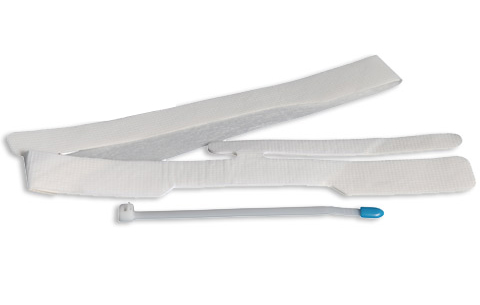
B&B Medical Technologies put these principles to work in Baby Tape Plus, a pre-cut infant endotracheal tube holder built around a non-irritating, latex-free hydrocolloid adhesive. The company chose hydrocolloid for this application deliberately, because securing an airway on a newborn calls for an adhesive far gentler than the foam or aggressive formulations that suit sturdier skin. The material contours to a baby’s tender skin and holds the tube reliably while keeping the trauma of wear and removal as low as possible.
That choice reflects how B&B Medical Technologies approaches neonatal securement more broadly. Holding a critical airway device in place and protecting fragile skin are treated as a single, linked problem rather than competing priorities. By designing around the conformability, gentle release, and moisture handling that a Hydrocolloid Tape provides, the company supports clinicians who need dependable tube fixation that respects the limits of newborn skin. For neonatal teams, that pairing of secure hold and skin-safe chemistry is what makes a securement product genuinely suited to the smallest patients across the demanding course of respiratory support.
Frequently Asked Questions
Hydrocolloid adhesive is used across clinical securement and skin protection, including ostomy care, wound dressings, and device fixation. It is valued for bonding securely while conforming to the skin and releasing gently, which makes it a common choice for fragile or sensitive skin.
It spreads its grip over a wider area instead of pulling hard at a few spots, and it softens into a gentle gel where it meets the skin. Because of that, it lifts off far more kindly than aggressive tapes and is much less likely to tear or strip skin that gets injured easily.
Acrylic and foam-backed tapes grip very firmly and last a long time, but that strong hold can be rough on delicate skin when it comes off. Hydrocolloid still holds securely, yet it releases more gently and manages moisture better, which makes it the easier choice for fragile or newborn skin.
Yes, and that is exactly why it is a common pick in newborn care. It is gentle, usually latex-free, and molds to soft, tender skin, so it can keep an important device in place while sparing a baby’s skin the kind of damage that tougher adhesives often cause.
It does. Instead of sitting on top of damp skin and peeling away, it works with that moisture to keep its grip steady. At the same time, it helps keep the skin underneath from staying wet for too long, which is one of the things that leads to skin breakdown.
MARSI is short for medical adhesive-related skin injury, which covers things like skin stripping, blisters, and tears that happen when an adhesive pulls harder than the skin can handle. Picking a gentler adhesive, putting it on correctly, and taking it off carefully all go a long way toward preventing it.