Skin under a medical device faces a sustained test, since it must tolerate adhesive contact, moisture, and pressure for hours or days while the device stays reliably in place. The condition of that skin shapes both patient comfort and how securely the device holds, which makes the skin interface a clinical concern in its own right. A Hydrocolloid Bandage supports this interface by maintaining moisture balance, cushioning against friction, and allowing longer undisturbed wear. Understanding why a stable, low-disruption interface protects fragile tissue clarifies why hydrocolloid has become a dependable choice wherever skin integrity has to hold up alongside secure device placement.
Why Skin Stability Matters as Much as Secure Device Placement
A device that stays perfectly positioned still creates a problem if the skin beneath it breaks down, which is why securement and skin protection function as a single clinical goal. The contact site absorbs adhesive tension, pressure, moisture, and the repeated handling that routine care involves. Over an extended period, those forces accumulate, and skin that started intact can deteriorate if the interface is poorly managed.
This connection runs in both directions. Compromised skin makes secure fixation harder, since adhesives bond less reliably to irritated or broken tissue, and a loosening device then transmits more stress to the same vulnerable area. The result can be a cycle where skin damage and securement failure reinforce each other across the course of care.
Treating the skin interface as part of securement, rather than a separate concern, breaks that cycle. A stable, well-protected contact site supports a dependable hold while sparing the tissue underneath. For fragile patients in particular, protecting skin integrity is inseparable from keeping the device where it belongs, which is why the quality of the interface deserves the same attention as the device itself throughout prolonged wear.
How a Moisture-Balanced Interface Protects Skin Under a Device
Moisture is one of the most common threats to skin held under a device, since the contact site traps perspiration, secretions, and humidity that can macerate tissue or loosen an adhesive. Managing that moisture at the interface is central to keeping the skin intact, and it is precisely where hydrocolloid materials perform well.
The goal is balance rather than dryness. Skin that becomes too dry can crack and lose integrity, while skin held in excess moisture softens and breaks down. A hydrocolloid contact surface absorbs surplus fluid into its structure while preserving the modest moisture healthy skin needs, holding the site within a range that tissue tolerates over long wear.
That balanced interface does double duty. By drawing excess moisture away, it protects the surrounding skin from maceration, and by retaining its gel structure against the skin, it maintains the close, stable contact that secure fixation depends on. A Hydrocolloid Bandage therefore supports the device and the skin at the same time, which is why a moisture-balanced interface is so valued in settings where a device must remain in place while the skin underneath stays protected through changing conditions.
Why Fewer Dressing Changes Support Better Skin Outcomes
Every time a dressing or securement is removed, the skin pays a small cost, which is why minimizing unnecessary changes is a practical way to protect fragile tissue. Removal applies lifting force to the surface, exposes the site to temperature and moisture shifts, and disturbs the stable conditions that had been established. Repeated across a long admission, these interruptions add up to meaningful cumulative stress.
Hydrocolloid materials are valued partly because they support longer, dependable wear when conditions allow. A dressing that holds securely for an extended period reduces the number of removal and reapplication cycles, and each cycle avoided is one less opportunity for adhesive trauma, skin stripping, or disruption of a stable site. Fewer changes also mean less handling overall, which matters for patients sensitive to repeated manipulation.
The aim is appropriate stability rather than indefinite wear. A dressing should still be reassessed and changed when the site or the dressing calls for it, yet avoiding needless early changes preserves both the skin and the securement. By supporting reliable wear that does not demand constant intervention, hydrocolloid helps care teams maintain a steady, protected interface while sparing fragile skin the repeated stress that frequent changes impose.
How a Hydrocolloid Bandage Creates Stable Conditions for Prolonged Wear
The stability hydrocolloid provides comes from how the material behaves against the skin over time, rather than from holding strength alone. On contact with surface moisture, the dressing forms a soft gel at the interface that conforms closely to the skin and fills the small irregularities of the contact area. This conforming gel layer maintains continuous, even contact, which is the foundation of a stable site.
That close contact resists the gradual loosening that undermines many dressings during long wear. As the patient moves, perspires, and is handled, a conforming hydrocolloid interface accommodates those changes while keeping its seal, which limits the edge lifting and shifting that expose skin and weaken fixation. The material works with the conditions at the site instead of fighting them.
Stability of this kind benefits both the skin and whatever the dressing helps secure. A site that stays sealed and even distributes contact across a broader surface, reducing the concentrated stress that damages tissue, and it holds position so the device it supports does not drift. A Hydrocolloid Bandage built for this behaviour gives clinicians a dependable interface across prolonged wear, which is why the material suits the extended, contact-heavy demands of clinical securement.
Why Protection From Friction and Pressure Matters as Much as Moisture
Moisture management alone does not keep skin intact, since mechanical forces threaten the contact site just as much. Friction from movement, pressure from the device, and repeated contact during handling all stress the skin under a securement, and protecting against those forces is an essential part of preserving tissue.
Hydrocolloid Tape addresses this by placing a soft, cushioning layer between the skin and the device. That layer absorbs some of the friction and pressure that would otherwise reach the skin directly, distributing force across a wider area rather than concentrating it at a single point. For skin already under strain, reducing this mechanical load helps prevent the irritation and breakdown that friction and pressure can cause.
This protection becomes more important the longer a device stays in place and the more the patient is handled. Turning, repositioning, and routine care all generate movement at the interface, and a cushioning barrier limits the wear that movement produces. Combined with its moisture handling, the physical protection a Hydrocolloid Tape layer provides is part of why the material supports skin integrity so well during the prolonged, movement-heavy demands of device securement.
What Still Undermines Skin Integrity Even With the Right Dressing
A well-chosen dressing improves the odds of keeping skin intact, yet it cannot override every factor that affects tissue, and recognizing those limits supports realistic care. Skin integrity depends on the patient’s overall condition as much as on the securement, so several influences can compromise a site despite good materials and technique.
Common factors that work against skin integrity include:
- Poor circulation. Reduced blood flow slows tissue resilience and recovery, leaving skin more prone to breakdown.
- Unrelieved pressure. Constant pressure on one area can damage tissue regardless of the dressing covering it.
- Edema and moisture overload. Significant swelling or heavy drainage can overwhelm even a capable interface.
- Nutritional compromise. Inadequate nutrition weakens the skin’s ability to withstand and recover from stress.
- Poor application or fit. A dressing applied with tension, sized incorrectly, or removed roughly can cause the very injury it should prevent.
Accounting for these realities keeps expectations grounded and care proactive. A dressing supports skin integrity, but routine reassessment, attention to the whole patient, and sound technique remain essential. Pairing the right material with that ongoing vigilance gives fragile skin its best protection during extended securement.
How B&B Medical Technologies Applies Hydrocolloid to Stable Neonatal Securement
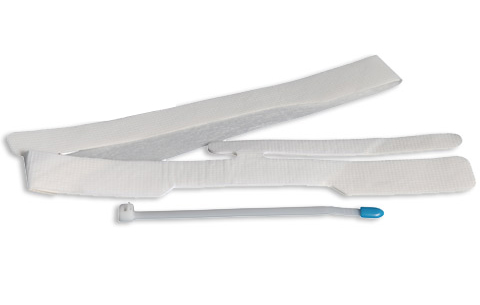
As the leading designer of clinically proven airway securement devices, B&B Medical Technologies built Baby Tape Plus to deliver exactly this kind of stable, low-disruption interface, using a pre-cut, latex-free hydrocolloid adhesive to secure an infant endotracheal tube. For a newborn, every removal and reapplication carries real risk to fragile skin, so a securement that holds dependably and reduces unnecessary handling protects the patient as much as it protects the airway.
The hydrocolloid contact surface conforms to a baby’s tender skin and maintains close, even contact through routine care, which supports the stable wear that limits repeated disruption. That stability matters most in neonatal settings, where the margin for skin injury is smallest and the airway must stay precisely positioned. By engineering securement around a conforming, moisture-managing interface, B&B Medical Technologies helps clinicians hold a critical device in place while sparing newborn skin the cumulative stress of frequent changes, supporting both a secure airway and intact skin across the demanding course of respiratory support.
Frequently Asked Questions
It can. By balancing moisture at the skin surface and cushioning against friction, it helps keep the contact site in good condition over long wear. Skin health still depends on the patient’s overall condition, not the dressing alone.
Each removal pulls at the skin and disturbs a settled site. A dressing that holds reliably for longer means fewer of those cycles, which lowers the chance of stripping, irritation, and disruption to fragile tissue.
When it meets moisture, it forms a soft gel that molds to the skin and fills tiny gaps, so it stays in close, even contact. That steady contact resists the edge lifting and shifting that loosen many dressings during long wear.
Skin under a device is worn down by rubbing and pressure, not just moisture. A Hydrocolloid Tape layer cushions the site and spreads out that force, which helps prevent the irritation and breakdown that movement can cause.
No. Things like poor circulation, constant pressure, swelling, and nutrition all affect the skin no matter how good the dressing is. The right material helps, but regular checks and careful technique are still needed.
It depends on the site and how much moisture it produces, and many dressings hold for an extended period when conditions allow. It should still be reassessed and changed once it saturates, lifts, or no longer sits securely.