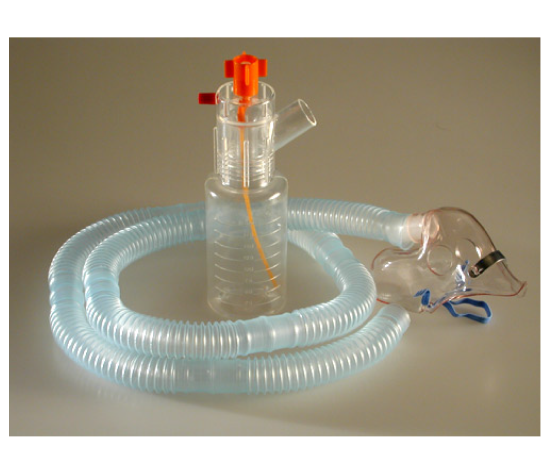
Sometimes, and the honest answer depends heavily on what’s actually causing the cough. A Nebulizer filled with saline offers modest, inconsistent benefit for a simple dry cough tied to irritation or dry air, largely by adding moisture back to airways that have dried out. When a dry cough traces back to asthma, airway inflammation, or bronchospasm, a medicated Nebulizer treatment tends to work considerably better, since it’s treating the underlying mechanism rather than just soothing the surface irritation.
What the Evidence Actually Says About Nebulizer Treatment for Dry Cough
Clinical guidance on this topic is more cautious than a lot of home health advice suggests. Saline nebulization for a routine dry or minimally productive cough, the kind that shows up after a cold or a mild bout of bronchitis, has limited supporting evidence and isn’t recommended as a first-line treatment by major respiratory guidelines. Where saline does show some benefit is narrower than most people assume: patients with measurable airway obstruction or genuinely thick, hard-to-clear secretions tend to respond better than patients whose cough is purely dry with nothing to loosen in the first place.
This distinction matters because it reframes the question. A Nebulizer isn’t a universal fix for any cough that shows up. It’s a delivery method, and how well it helps depends entirely on what’s going into it and whether that treatment matches what’s actually driving the cough. For a broader look at how nebulizer therapy interacts with different cough mechanisms, Benefits of Nebulizer for Cough covers the underlying reasoning in more depth.
Why Dry Cough Happens and What a Nebulizer Can and Can’t Fix
Dry cough usually traces back to irritation or inflammation somewhere along the airway, without the mucus buildup that defines a productive cough. Common triggers include viral infections, dry indoor air, allergens, or hypersensitive cough receptors left irritated after an illness has otherwise resolved. Since there’s no mucus to clear in these cases, a Nebulizer‘s ability to loosen secretions simply isn’t relevant to the problem at hand.
What a nebulizer can offer in this situation is moisture. Hydrating irritated airway tissue can reduce the mechanical irritation that triggers a cough reflex, though this effect tends to be modest and short-lived rather than a lasting fix. For a cough driven purely by dryness or mild irritation, simpler measures, such as drinking water, using a room humidifier, and sipping warm liquids, often provide comparable relief without introducing nebulizer equipment into the mix at all.
Quick Reference: Matching Cough Type to Treatment Approach
Not every dry cough calls for the same response. Here’s a general breakdown of how different presentations tend to line up with different approaches:
- Simple dry cough from a cold or dry air: steam, hydration, or saline nebulization may offer mild, temporary relief
- Dry cough with wheezing or chest tightness: often responds better to a bronchodilator like albuterol
- Dry cough tied to diagnosed asthma or allergies: typically needs an anti-inflammatory medication such as budesonide
- Dry cough with thick secretions or bronchiectasis: may call for hypertonic saline, guided by a pulmonologist
- Dry cough lasting more than a few weeks, or worsening: needs medical evaluation, not another round of home treatment
- Dry cough with fever, chest pain, weight loss, or blood: requires prompt medical attention
This isn’t a substitute for a clinician’s assessment. It’s a starting point for understanding why one nebulizer approach might make sense for a given situation while another wouldn’t.
Saline vs. Medicated Nebulizer Treatment for Cough
Saline Nebulization | Medicated Nebulizer Treatment | |
What it does | Adds moisture to irritated airway tissue | Treats airway tightening or inflammation directly |
Best suited for | Mild dryness, thick secretions, general irritation | Asthma, allergies, bronchospasm, diagnosed airway inflammation |
Evidence for dry cough | Limited and inconsistent | Stronger when tied to a confirmed underlying condition |
Needs a prescription | Usually not, for standard isotonic saline | Yes, in nearly all cases |
Onset of relief | Modest, often temporary | Can begin within minutes for bronchodilators |
When Medicated Nebulizer Treatment Makes More Sense Than Saline Alone
A dry cough tied to asthma, allergies, or airway inflammation responds to a fundamentally different mechanism than a cough caused by simple dryness. In these cases, a Nebulizer delivering a bronchodilator like albuterol or an anti-inflammatory medication like budesonide addresses the actual airway tightening or inflammation driving the cough, rather than just adding moisture to tissue that isn’t the root problem.
This is also where cough type becomes a genuinely useful diagnostic clue. A dry cough that worsens with exercise, cold air, or allergen exposure, or one accompanied by wheezing or chest tightness, points toward an inflammatory or reactive airway cause that medicated nebulizer treatment is built to address. A prescribing clinician typically needs to confirm this diagnosis before recommending a specific medication, since self-treating a dry cough with borrowed or leftover nebulizer medication carries real risk if the underlying cause turns out to be something the medication wasn’t intended for.
Why Steam or Simple Hydration Sometimes Can Be An Effective Option
For a mild dry cough tied to a common cold or general dryness, steam inhalation often provides comparable relief to saline nebulization, without requiring dedicated equipment or setup time. Both approaches work through a similar mechanism, adding moisture to irritated airway tissue, and the choice between them often comes down to convenience and what’s already on hand rather than one being clearly superior to the other for this specific use case.
Where a Nebulizer pulls ahead is in cases involving actual respiratory disease, asthma, COPD, or a diagnosed condition requiring targeted medication delivery, since steam alone can’t deliver a bronchodilator or corticosteroid to the lower airways the way nebulized medication can. Matching the tool to the actual severity and cause of the cough, rather than defaulting to whichever option feels more medical, tends to produce better results either way.
Cough Types That Respond Better to Nebulizer Therapy
Certain cough presentations respond more reliably to nebulizer treatment than a simple dry cough does. Wheezing, chest tightness, and cough accompanied by shortness of breath often improve noticeably with bronchodilator therapy, sometimes within minutes of treatment. Chronic cough tied to an established respiratory condition, particularly asthma, COPD, or bronchiectasis, also tends to show a more consistent, measurable response to nebulizer therapy than a short-term dry cough from a viral illness ever does.
Cost considerations come up frequently for patients managing chronic conditions who rely on nebulizer therapy long-term, particularly around ongoing supplies like tubing, masks, and medication cups that need periodic replacement. What Are the Cheapest Nebulizer Accessories for COPD? covers practical options for keeping these ongoing costs manageable without compromising treatment quality.
When a Dry Cough Needs More Than a Nebulizer Session
A dry cough hanging on past a few weeks, one that’s clearly getting worse instead of better, or one showing up alongside fever, chest pain, sudden weight loss, or blood when you cough, isn’t something to keep managing with home nebulizer sessions. Those signs point toward something a doctor needs to look at directly, and putting off that visit in favor of another round of saline or steam just gives whatever’s actually going on more time to progress.
This caution matters even more for infants and very young children, where a dry cough can stem from a wider range of causes and where nebulizer use itself needs closer medical guidance. Is a Nebulizer Safe for a 2-Month-Old Baby? addresses the specific considerations that apply to this age group, since infant respiratory care follows a different risk calculus than adult or older child care does.
Frequently Asked Questions
Sometimes, though, the evidence for saline nebulization treating a simple dry cough is limited. Nebulizer treatment tends to work better when the cough is tied to asthma, airway inflammation, or another diagnosed respiratory condition rather than simple dryness or irritation.
Not typically as a go-to treatment. Most respiratory guidelines stop short of recommending it for routine dry cough, since the evidence backing it up just isn’t strong. It might ease some airway irritation, but it won’t touch whatever’s actually causing the cough in the first place, whether that’s inflammation or an infection working its way through.
Saline works on comfort. It adds moisture to irritated airway tissue, which can take the edge off a dry, scratchy cough, but that relief tends to be temporary. Medicated treatment goes after the actual cause, using a bronchodilator or corticosteroid to calm the airway tightening or inflammation behind coughs linked to asthma or similar reactive airway conditions.
For a mild cough tied to a cold or dry air, steam inhalation often provides comparable relief to saline nebulization, since both work by adding moisture to irritated tissue rather than treating an underlying respiratory condition.
Get it checked out if it’s stuck around for more than a few weeks, keeps getting worse, or shows up alongside fever, chest pain, unexplained weight loss, or blood in the cough. Those are signs worth a doctor’s attention rather than another round of home treatment.