Neonatal respiratory distress can progress quickly because the newborn lung has limited reserve, especially in premature infants with surfactant deficiency, weak respiratory muscles, fluid retention, or incomplete lung transition after birth. The first respiratory-support decision often centers on whether the baby can maintain spontaneous breathing with non-invasive pressure support or whether invasive ventilation is needed to take over more of the work of breathing. That decision is not simply about oxygen level. It also depends on chest movement, grunting, retractions, blood gas trends, apnea, heart rate response, lung compliance, and how much support the infant needs to keep alveoli open.
Bubble CPAP and mechanical ventilation both support newborns with respiratory distress, but they do so in very different ways. Bubble CPAP delivers continuous distending pressure to maintain spontaneous breathing through a non-invasive interface. Mechanical ventilation delivers breaths through an endotracheal tube when the infant cannot sustain adequate ventilation or oxygenation with less invasive support. Understanding this difference allows respiratory care teams to choose support that is appropriate to the infant’s severity, preserves delicate lung tissue, and allows escalation or weaning at the appropriate time.
Choosing the Right Respiratory Support for Neonatal Distress
Respiratory distress syndrome is strongly linked to surfactant deficiency, which makes alveoli more likely to collapse at the end of exhalation. When alveoli repeatedly collapse and reopen, the infant must work harder with each breath, oxygen exchange becomes less efficient, and the risk of respiratory failure increases. Respiratory support is used to reduce that instability, but the type of support matters because neonatal lungs are especially vulnerable to pressure injury, oxygen exposure, atelectasis, and inflammation.
If the infant is breathing spontaneously and is able to maintain an adequate respiratory drive with assistance, non-invasive pressure support may be preferred. In that setting, the goal is to keep functional residual capacity more stable, reduce alveolar collapse, and improve oxygenation without placing an endotracheal tube. Mechanical ventilation becomes more relevant when the infant has severe apnea, poor respiratory effort, worsening blood gases, severe oxygen requirement, or failure to respond to non-invasive support.
The clinical decision also affects the rest of the NICU care. Non-invasive support requires attention to interface fit, nasal protection, bubbling activity, pressure setting, humidification, and gastric decompression. Mechanical ventilation requires endotracheal tube placement, securement, ventilator settings, suctioning access, cuffless tube management in many neonates, and closer monitoring for ventilator-associated complications. Both methods may be suitable, but not interchangeable.
How Bubble CPAP Facilitates Spontaneous Breathing
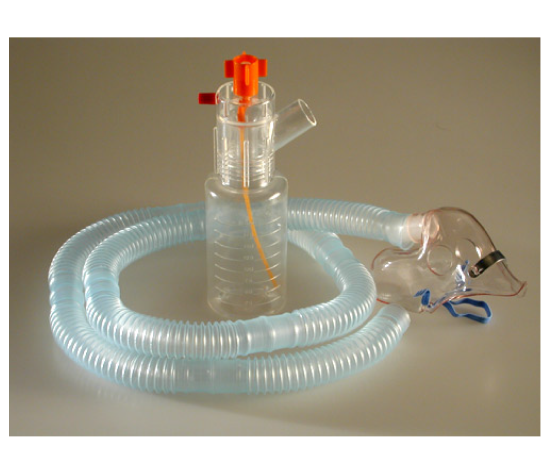
Bubble CPAP provides continuous positive airway pressure with the infant breathing spontaneously. The system maintains distending pressure during the respiratory cycle, which helps reduce end-expiratory alveolar collapse and supports more stable lung volume. In neonatal respiratory distress, continuous pressure can reduce the work needed to reopen unstable alveoli with every breath and may help improve oxygenation when the infant still has adequate respiratory effort.
The bubbling chamber is more than a visual feature. It helps confirm that gas flow is moving through the system and that the pressure circuit is active. Bubbling also generates small pressure oscillations, which may be involved in gas exchange and airway recruitment, but clinical management relies on the whole setup, not bubbling per se. The infant interface, seal, water level, flow, humidification, and patient position all affect how effectively the delivered pressure reaches the airway.
This is why Bubble CPAP works best when bedside teams treat it as an active respiratory-support system rather than a passive oxygen device. A baby who appears stable on CPAP still needs close monitoring for respiratory rate, retractions, grunting, oxygen requirement, nasal injury, abdominal distension, apnea, and blood gas response. Success depends on matching the therapy to the infant’s physiology and recognizing early when non-invasive support is no longer enough.
For a foundational explanation of setup, pressure behavior, and clinical use, clinicians can read What Is Bubble CPAP? A Complete Guide for Respiratory Care Professionals.
How Mechanical Ventilation Differs in Neonatal Respiratory Distress
Mechanical ventilation provides a higher level of respiratory support because breaths are delivered through an endotracheal tube. This may be necessitated when the newborn is unable to sustain adequate ventilation, has recurrent apnea, shows severe respiratory fatigue, or develops progressive carbon dioxide retention and acidosis. In these circumstances, the infant may need controlled or assisted breaths to stabilize gas exchange while the underlying lung condition is treated.
The main advantage of mechanical ventilation is that it allows more controlled breath assistance when spontaneous breathing is inadequate. Clinicians can titrate inspiratory pressure, rate, inspiratory time, positive end-expiratory pressure, and fraction of inspired oxygen according to lung mechanics and blood gas response. This makes mechanical ventilation indispensable in severe respiratory failure, but also carries risks, as positive-pressure breaths delivered via an endotracheal tube can add to volutrauma, barotrauma, air leak, airway trauma, infection risk, and inflammatory lung injury if not carefully managed.
Mechanical ventilation also changes workflow. Once the infant is intubated, the team must manage tube depth, tube securement, suctioning, airway patency, ventilator synchrony, sedation needs, and extubation readiness. The goal is often to use invasive ventilation when clinically necessary while returning to non-invasive support as soon as the infant can safely tolerate it.
Bubble CPAP vs Mechanical Ventilation: The Core Clinical Difference
The clearest difference is that Bubble CPAP supports a newborn who is still breathing, while mechanical ventilation can partially or fully take over breath delivery. CPAP maintains pressure around spontaneous breathing. Mechanical ventilation delivers breaths through an artificial airway. That distinction shapes almost every clinical decision, including escalation, weaning, monitoring, complication risk, and bedside workload.
For infants with mild to moderate respiratory distress who maintain respiratory drive, CPAP may help stabilize the lung without intubation. This can reduce exposure to invasive airway management and may support a gentler respiratory path when the infant responds well. For infants with persistent apnea, severe acidosis, worsening oxygen needs, or signs of fatigue despite non-invasive support, mechanical ventilation may be needed because the infant is no longer compensating adequately.
The comparison should not be framed as one therapy always being better than the other. The better choice is the one that matches the infant’s physiology at that moment. A baby may begin on CPAP, require surfactant or escalation if distress worsens, then return to non-invasive support after stabilization. Neonatal respiratory care often moves along that continuum rather than staying fixed in one mode.
When Bubble CPAP May Be Preferred Before Intubation
Bubble CPAP may be considered early when a newborn has respiratory distress but continues to breathe spontaneously with enough drive to benefit from distending pressure. Common bedside signs may include tachypnea, mild to moderate retractions, grunting, nasal flaring, or oxygen requirement that improves with pressure support. In these cases, CPAP may help maintain alveolar recruitment while avoiding the immediate need for invasive ventilation.
This approach is especially relevant for preterm infants at risk of respiratory distress syndrome because maintaining lung volume early may reduce the cycle of collapse and reopening that increases the work of breathing. CPAP can also support transition after birth when the lungs are still clearing fluid and adapting to air breathing. The clinical goal is to give the infant enough pressure support to stabilize breathing while closely monitoring for signs that the disease is progressing.
Early CPAP still requires discipline. Interface leak, incorrect water level, insufficient flow, poor nasal fit, excessive oxygen requirement, frequent apnea, rising carbon dioxide, or worsening retractions can all indicate that the current support is not meeting the infant’s needs. A good CPAP trial is not simply “putting the baby on CPAP.” It is an ongoing assessment of whether the infant is improving, stabilizing, or failing non-invasive support.
To see how B&B Medical Technologies frames neonatal respiratory support innovation, teams can explore Bubble CPAP: What Makes it a Breakthrough in Neonatal Care.
Signs a Newborn May Need Mechanical Ventilation
Mechanical ventilation becomes necessary when the infant’s respiratory effort, oxygenation, or ventilation cannot be supported safely with non-invasive pressure alone. Warning signs may include recurrent apnea, severe respiratory distress, poor chest movement, persistent hypoxemia despite increasing support, rising carbon dioxide, respiratory acidosis, shock, severe fatigue, or need for advanced procedures such as surfactant administration through an endotracheal tube, depending on local protocol.
In these cases, delaying escalation can be harmful because the infant may continue to tire while oxygen delivery and carbon dioxide removal worsen. Mechanical ventilation gives the care team more direct control over breath delivery and gas exchange while the underlying cause is managed. The purpose is not to replace CPAP as a preferred early strategy, but to provide the level of support required when the newborn’s condition exceeds what non-invasive support can safely handle.
Escalation decisions should remain based on clinical response rather than a single number. Oxygen requirement, blood gas trends, work of breathing, apnea frequency, chest radiograph findings, gestational age, birth weight, surfactant status, and hemodynamic condition all influence the decision. The best neonatal respiratory support plan is one that avoids unnecessary intubation while also avoiding delayed intubation when invasive support is clearly needed.
What Clinicians Monitor During Bubble CPAP and Ventilation
Monitoring changes because the therapies place different demands on the infant’s breathing. During CPAP, clinicians focus on whether spontaneous effort is effective while distending pressure supports lung expansion. Respiratory rate, retractions, grunting, oxygen requirement, bubbling activity, leak, nasal interface position, skin condition, abdominal distension, apnea episodes, and blood gas response help guide assessment. Since CPAP depends on consistent pressure delivery, even small changes in seal, fit, or bubbling can affect the infant’s response.
During mechanical ventilation, monitoring shifts toward ventilator settings, delivered volumes or pressures, depending on the mode, chest rise, blood gases, oxygen requirement, tube position, suctioning needs, ventilator synchrony, and signs of overdistension or atelectasis. Because an endotracheal tube is involved, clinicians must also watch for tube displacement, obstruction, secretion plugging, and airway trauma. The infant’s lungs may change quickly after surfactant, fluid shifts, or clinical improvement, so ventilator settings often need close reassessment.
The shared goal in both therapies is to support gas exchange while reducing avoidable lung stress. Whether a newborn is on CPAP or invasive ventilation, the team is continuously asking whether the current support is enough, whether it is too much, and whether the infant is ready for escalation, stabilization, or weaning.
For a deeper look at functional respiratory changes with non-invasive pressure support, read How Does Bubble CPAP Improve Respiratory Function in Newborns?.
Skin, Interface, and Securement Considerations in Neonatal Support
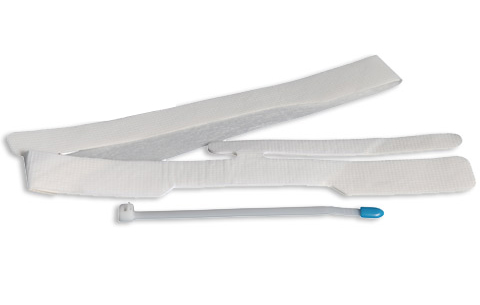
Non-invasive respiratory support places repeated pressure on the nose, cheeks, septum, and surrounding skin. In preterm or medically fragile newborns, the skin barrier is thin and more vulnerable to pressure injury, moisture exposure, adhesive trauma, and device movement. CPAP interface fit must be firm enough to reduce leak but not so tight that it causes nasal injury. This balance is one of the most important bedside challenges in neonatal CPAP care.
Mechanical ventilation creates a different set of interface concerns because the endotracheal tube must remain secure without creating excessive pressure on the face, lips, or surrounding tissue. Tube securement, oral access, suctioning, and repositioning all influence airway safety. In both support pathways, respiratory care is inseparable from skin protection because device stability and tissue integrity affect how safely therapy can continue.
Hydrocolloid barriers may be used in some care settings to help protect fragile skin from friction, moisture, or device-related pressure. Their use depends on facility protocol, patient condition, and the device setup. For readers who want more context on skin protection and dressing function, What Is a Hydrocolloid Bandage and How Does It Protect Sensitive Skin? can support a broader understanding of interface-related skin care.
Neonatal Respiratory Workflow Support From B&B Medical Technologies
B&B Medical Technologies develops respiratory care products that support practical clinical workflows in neonatal and critical care environments. In neonatal respiratory distress, the bedside team needs equipment that supports pressure delivery, monitoring visibility, interface management, and safe respiratory care without adding unnecessary complexity. The brand’s respiratory portfolio reflects the reality that neonatal care depends on precise support, careful observation, and frequent reassessment.
For respiratory care teams, product design matters because small workflow barriers can affect therapy consistency. A neonatal CPAP setup must allow clinicians to confirm pressure activity, manage interface position, protect delicate skin, assess breathing response, and respond quickly when escalation is needed. B&B Medical Technologies focuses on respiratory-support solutions that fit those bedside demands and help clinicians maintain a more organized approach to neonatal respiratory care.
How Bubble CPAP Fits Into the Respiratory Support Continuum
Bubble CPAP is best understood as one point on the neonatal respiratory support continuum. It offers non-invasive distending pressure for infants who still have enough spontaneous breathing effort to benefit from CPAP support. It may reduce the need for intubation in appropriately selected infants, but it must be paired with close clinical monitoring because some newborns will still require surfactant, escalation, or mechanical ventilation.
Mechanical ventilation remains essential when the newborn cannot maintain adequate gas exchange, has severe apnea, or shows signs of respiratory failure. The strongest respiratory-care strategy is not choosing one therapy as universally superior. It is knowing when to begin non-invasive support, when to escalate, when to wean, and how to protect the infant’s lungs, skin, airway, and developmental stability throughout the course of care.
For clinicians who want to compare broader uses of CPAP support, Bubble CPAP Therapy: How it Supports Respiratory Care for Neonates & Adults provides an additional perspective on how distending pressure can support respiratory care across different patient needs.
Frequently Asked Questions
Bubble CPAP supports spontaneous breathing by delivering continuous distending pressure through a non-invasive interface. Mechanical ventilation is provided via an endotracheal tube when the infant needs more direct control of ventilation or cannot maintain adequate gas exchange.
It is often used in a newborn with respiratory distress, but who is still able to breathe spontaneously with the aid of pressure support (non-invasive mechanical ventilation). The clinician monitors work of breathing, oxygen requirement, apnoea, blood gases, and overall response to determine if CPAP alone is sufficient.
Mechanical ventilation should be considered if the infant develops recurrent apnoea, deteriorating oxygenation, rising carbon dioxide, respiratory acidosis, significant fatigue, poor chest movement, or does not improve on non-invasive support.
Early non-invasive CPAP support in selected preterm infants may reduce the need for intubation and invasive ventilation, but does not obviate the need for mechanical ventilation in infants with severe respiratory failure or poor respiratory drive.
Bubble CPAP is non-invasive and may reduce some of the risks of invasive ventilation, but monitoring for nasal injury, air leak, abdominal distension, and failure of therapy is still necessary. Mechanical ventilation carries greater invasive airway risks but is necessary when non-invasive support is not enough.
Yes. Many neonatal respiratory plans use invasive ventilation only as long as needed, then transition the infant back to non-invasive support when breathing effort, oxygenation, and blood gas stability improve.
Signs may include increasing oxygen requirement, worsening retractions, recurrent apnea, increasing carbon dioxide, respiratory acidosis, poor chest movement, persistent desaturation, or clinical fatigue despite appropriate CPAP setup and monitoring.
Interface fit affects pressure delivery, leak, skin integrity, and treatment consistency. A poor seal can lead to decreased effective pressure, but excess pressure from the interface may increase the risk of nasal or facial skin injury.