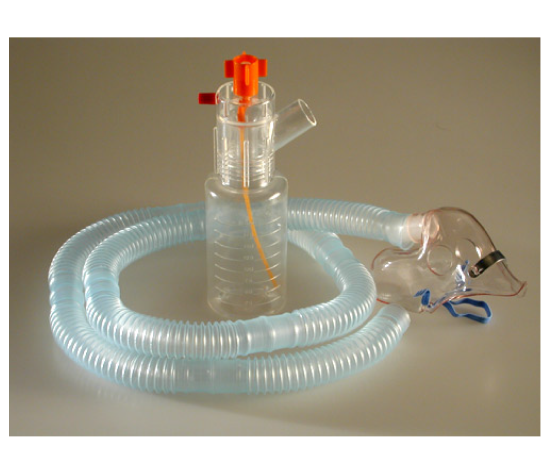
Most people are familiar with the medication cup, mouthpiece, and tubing on a Nebulizer, but not as familiar with the purpose of the reservoir tube. It might seem like a simple accessory, but it plays a specific role in how aerosol medication moves through the treatment system and becomes available for inhalation.
The reservoir tube is designed to support aerosol delivery during the natural breathing cycle. In order to understand why it exists, it is helpful to first understand what happens inside a nebulizer treatment from the time medication is converted to aerosol until it reaches the patient’s airway.
How Aerosol Is Produced During a Nebulizer Treatment
A nebulizer converts liquid medication into microscopic particles that can be inhaled into the respiratory tract. This can be done via compressed air, ultrasonic vibration, or vibrating mesh technology, depending on the design of the device. Once generated, the aerosol enters the breathing pathway and becomes available for inhalation.
The challenge is that aerosol production and human breathing do not always occur at exactly the same moment. During a treatment session, aerosol may continue to be generated while the patient is exhaling. Because patients alternate between inhaling and exhaling, not every aerosol particle reaches the lungs immediately after it is created.
Understanding this timing difference is important, as it explains why some nebulizer systems include extra components to better control aerosol flow.
Why Reservoir Tubes Were Added to Some Nebulizer Systems
Reservoir tubes were developed to address a practical delivery challenge. During exhalation, aerosol can continue to be produced even though the patient is not actively inhaling. Without a means to temporarily retain that aerosol, some of the medication will escape to the surrounding environment.
The reservoir tube provides additional space in the delivery pathway where aerosol can remain available until the next inhalation begins. This system is not only about creating a medication mist but also about the behavior of aerosol between breaths.
This design approach reflects a broader goal in respiratory therapy: improving how available medication is managed throughout the treatment session rather than concentrating only on aerosol production.
What Happens When Aerosol Is Lost During Exhalation
Aerosol loss is a normal consideration in respiratory therapy. When medication leaves the device but is not inhaled, it no longer contributes to treatment effectiveness. Over time, repeated losses can influence how much medication ultimately becomes available to the patient.
Environmental aerosol loss may also contribute to unnecessary medication dispersion within the treatment area. While some loss occurs with many aerosol systems, reducing avoidable waste remains an important objective in respiratory care.
The amount of dose delivered to the lungs is dependent on several factors, such as breathing pattern, device design, particle properties, and the overall system configuration. Reservoir systems are one approach used to help improve aerosol availability during treatment.
How Reservoir Tubes Influence Medication Delivery Efficiency
The role of the reservoir tube becomes most apparent when looking at treatment efficiency. The system may help keep aerosol between breaths, which could result in more medication being available for inhalation than in systems that allow more aerosol to escape immediately.
This does not mean that every particle is delivered perfectly or that all patients achieve the same results. Respiratory therapy is still subject to individual breathing patterns, disease state, airway condition, and device performance. However, maximizing the availability of aerosol during the breathing cycle can help to deliver more consistent treatment.
For respiratory-care professionals, efficiency is not simply about generating aerosol. It is about helping more of the prescribed medication remain accessible throughout the treatment session.
Which Patients May Benefit Most From Reservoir-Based Nebulizer Systems?
Different patients use nebulizers for different reasons, and reservoir-equipped systems may offer advantages in certain situations.
Patients with chronic respiratory conditions often need to undergo repeated aerosol treatments for extended periods of time. Pediatric patients may have variable breathing patterns, while older adults may have decreased inspiratory strength. In either case, maximizing the availability of medication during inhalation can be an important consideration.
Delivery systems designed to help ensure consistency of treatment may also be beneficial for people on routine respiratory therapies. Ultimately, the choice of a device will depend on clinical goals, patient condition, type of medication, and recommendations from healthcare providers.
Reservoir Tube vs Standard Nebulizer Setup
The reservoir tube represents one difference between nebulizer configurations. While both systems generate aerosol medication, they manage aerosol movement differently during the breathing cycle.
Feature | Standard Nebulizer Setup | Reservoir Tube Setup |
Aerosol retention between breaths | Lower | Higher |
Environmental aerosol loss | Greater | Reduced |
Medication availability during inhalation | More variable | Improved |
Treatment efficiency | Dependent on breathing cycle | Enhanced aerosol availability |
Design complexity | Simpler configuration | Includes additional aerosol-management component |
Both systems have important clinical applications, but understanding these differences helps explain why reservoir tubing is included in some respiratory-care designs.
Common Reservoir Tube Issues That Can Affect Performance
A reservoir tube can only support aerosol delivery properly when it remains clean, open, and correctly connected. Kinks, cracks, loose fittings, or improper assembly may disrupt normal airflow and affect how aerosol moves through the system. Even small setup issues can change the way medication travels from the nebulizer chamber toward the patient interface.
Another common problem is a buildup of moisture. Condensation can build up inside tubing during treatment, especially when aerosol and airflow are passing through the system for several minutes. Excess moisture can interfere with the movement of aerosol or may create places where residue collects if the equipment isn’t properly cleaned and dried.
Routine inspection helps prevent these problems from becoming part of the treatment experience. Patients and caregivers should check tubing condition, connection points, visible residue, moisture accumulation, and manufacturer replacement guidance so the system continues to function as intended.
What Clinicians Monitor During Nebulizer Therapy
Respiratory care practitioners look for more than just the visible mist during a nebulizer treatment. They may assess breathing pattern, tolerance of the treatment, response to the medication, airway sounds, changes in secretions, oxygen requirements, and whether the patient can comfortably complete the session.
The presence of an aerosol cloud does not guarantee effective delivery of the medication. The care team may need to change technique, position of the equipment, or the entire treatment plan if the patient is breathing too fast, discontinuing treatment prematurely, using the interface poorly, or demonstrating increased respiratory distress.
Clinical response still remains one of the most important aspects in therapy evaluation. Improvement in breathing effort, airway clearance, chest tightness, or symptom control may help to show whether the treatment is supporting the intended respiratory goal.
Patients who want a broader understanding of respiratory treatment options can also explore What Are the Nebulizers and Their Benefits?
Why Proper Maintenance Supports Long-Term Nebulizer Performance
Aerosol delivery systems require clean and properly functioning parts. Improper equipment maintenance can cause hygiene problems and gradually reduce the reliability of the device. It is essential to clean and store the device correctly between treatments to prevent the buildup of medication, moisture, and contamination that can affect the airflow, aerosol output, and overall performance of the device.
Cleaning also makes repeated use safer. Each time a nebulizer is used, it is exposed to medication, moisture, and the patient. It is important to dry the components thoroughly after cleaning, as trapped moisture can affect future use.
For detailed guidance, read How to Properly Maintain and Clean Your Nebulizer for Long-Term Use.
How B&B Medical Technologies Supports Respiratory Care Workflows
B&B Medical Technologies has supported respiratory-care professionals for decades through products developed around practical respiratory workflows, aerosol delivery, airway management, neonatal care, humidification support, and clinical respiratory support systems.
Successful aerosol therapy depends on more than medication alone. Device design, airflow management, patient interface selection, humidification, and treatment consistency all contribute to overall performance. B&B Medical Technologies develops respiratory care solutions that help clinicians manage these variables while promoting organized bedside care and reliable respiratory therapy.
For readers interested in neonatal respiratory management, How Does CPAP Work in Neonates? provides further detail on respiratory support strategies used for newborn patients with particular breathing needs.
Why Every Component of a Nebulizer System Has a Purpose
The reservoir tube is a great example of how even the smaller parts of a device can affect how well respiratory therapy works overall. While the medication chamber usually gets the most attention, the supporting components help control how the aerosol moves through the treatment.
Understanding how each part functions allows patients and caregivers to use respiratory equipment more effectively and appreciate why proper setup, maintenance, and operation remain important. The more complete the understanding of the system, the more likely it is that therapy can be delivered consistently and as intended.
A nebulizer works best when all parts are clean, correctly assembled, and used according to product guidance. Reservoir tubing, medication chambers, mouthpieces, masks, and standard tubing each support a specific part of the treatment pathway, and each should be treated as part of the complete delivery system.
Frequently Asked Questions
The reservoir tube offers a temporary space to keep the aerosol available between breaths to help manage the aerosol during the breathing cycle.
No. Some nebulizer systems have reservoir tubing, and some employ other aerosol delivery designs.
It can reduce some medication loss that occurs during exhalation, potentially improving aerosol availability during inhalation.
No. The prescribed dose of medication does not change. The reservoir tube affects how the aerosol is delivered.
The benefits are related to the patient’s condition, breathing pattern, treatment goals, and choice of device, and the healthcare professional selecting the most appropriate system for each patient.
Yes. Excess condensation or blockage can interfere with normal airflow and aerosol movement within the system.
It is recommended that tubing be regularly inspected for cracks, excessive moisture buildup, and wear and tear.
No. The standard tubing usually carries air or oxygen. The reservoir tube is supposed to help with aerosol management in the delivery pathway.