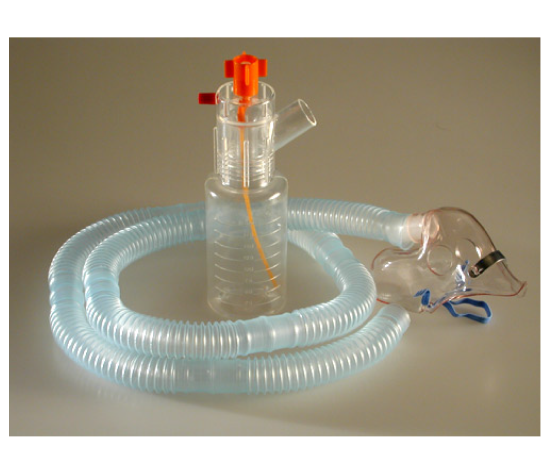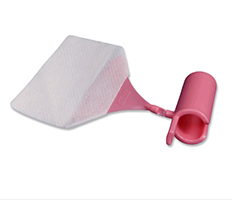
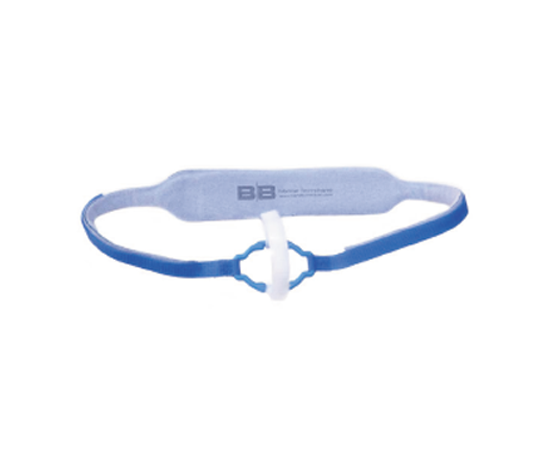
A Trach collar is used when oxygen delivery has to support an artificial airway without relying on a sealed ventilation circuit. In post-extubation recovery and tracheostomy care, the clinical goal is not only to provide oxygen, but to do so in a way that respects changing airway mechanics, secretion burden, humidification needs, and the patient’s ability to breathe spontaneously. Once a patient is no longer intubated or is breathing through a tracheostomy tube, respiratory support depends more heavily on how well the airway is maintained, how effectively oxygen is delivered, and how consistently the setup performs during routine care.
Trach collar oxygen delivery is clinically beneficial in this context. It administers supplemental oxygen directly to the tracheostomy site, facilitating patient respiration without the limitations imposed by a closed ventilator circuit. This approach is particularly valuable during the transitional phase of post-extubation and long-term tracheostomy management, enabling clinicians to assess tolerance, manage secretions, evaluate oxygen requirements, and monitor airway stability. The quality of that support also depends on whether the tube remains secure, which is where a dependable Tracheostomy Tube Holder becomes part of the larger care strategy rather than a separate accessory decision.
How Trach Collar Oxygen Delivery Works in Clinical Care
A Trach collar delivers humidified oxygen over the tracheostomy opening through a loose-fitting interface designed to sit around the neck and over the tracheostomy tube. This setup allows oxygen to flow directly toward the airway without creating a sealed pressure environment. In clinical care, this makes it suitable for patients who are breathing spontaneously and need supplemental oxygen support but do not require full ventilator assistance.
The value of this method comes from how it supports the airway while preserving a more natural breathing pattern. Because the system remains open, patients can inhale and exhale more freely while still receiving oxygen enrichment at the tracheostomy site. When humidification is managed properly, the Trach collar also helps reduce airway drying, which is important in tracheostomy care because bypassing the upper airway removes much of the natural warming and humidifying function that would otherwise protect the lower respiratory tract.
Why Trach Collar Support Is Used After Extubation
After extubation, some patients still need oxygen support and close airway monitoring even though they no longer require an endotracheal tube. For patients with a tracheostomy, the trach collar serves a crucial function during this phase by delivering oxygen directly to the airway. This allows healthcare professionals to assess respiratory effort, the clearance of secretions, and the patient’s capacity to adjust to reduced respiratory support. Close observation is essential during this period, given the patient’s frequent shift from more controlled ventilation to spontaneous breathing with less structured assistance.
A tracheostomy collar is advantageous in this context because it facilitates the assessment of a patient’s capacity to sustain adequate oxygenation and airway integrity absent the limitations imposed by a closed ventilatory system. This approach offers enhanced visibility into respiratory exertion and the management of secretions, all while delivering supplemental oxygen. Consequently, within post-extubation protocols, it proves valuable in step-down respiratory care, particularly when the emphasis is on tolerance, airway clearance, and the patient’s preparedness for a further decrease in ventilatory assistance.
How Trach Collar Therapy Supports Tracheostomy Care
In tracheostomy care, oxygen delivery is only one part of the respiratory picture. The patient also depends on airway patency, secretion control, humidification, and tube stability to maintain consistent breathing. A Trach collar supports this setting by providing supplemental oxygen in a way that works with spontaneous breathing and routine tracheostomy management instead of replacing it with a more restrictive support method.
This approach is especially useful when the airway remains vulnerable to secretion buildup or when the patient is still adapting to breathing through a tracheostomy tube. Humidified oxygen can help support secretion mobilization, reduce dryness, and improve comfort during care. Over time, the Trach collar becomes part of a broader management strategy that supports oxygenation while allowing clinicians to focus on airway assessment, suctioning needs, and tolerance of the tracheostomy setup itself.
Why Humidification Matters With Trach Collar Oxygen Delivery
A tracheostomy bypasses the upper airway, which means inhaled gas no longer receives the same natural warming and humidification it would normally receive through the nose and mouth. Without adequate humidification, secretions can thicken, airway surfaces can dry out, and secretion clearance can become more difficult. In tracheostomy care, those changes can quickly affect comfort, airway patency, and the amount of intervention needed at the bedside.
A humidified Trach collar helps address that problem by delivering oxygen with moisture support directly to the tracheostomy site. This helps keep secretions more manageable and reduces the drying effect that can complicate care over time. In clinical use, humidification is not a secondary feature. It is closely tied to how well the patient tolerates oxygen delivery, how effectively secretions are cleared, and how stable the airway remains between suctioning and assessment intervals.
How a Tracheostomy Tube Holder Supports Safe Oxygen Delivery
Oxygen delivery through a Trach collar depends on the tracheostomy tube remaining properly positioned. If the tube shifts, becomes unstable, or is subjected to repeated movement during care, oxygen delivery becomes less consistent, and airway management becomes more difficult. This is why a secure Tracheostomy Tube Holder supports more than tube retention alone. It helps preserve the position on which the full oxygen setup depends.
A dependable tracheostomy tube holder also mitigates superfluous tube displacement during suctioning procedures, patient repositioning, and routine care activities. This aspect is significant because recurrent movement can engender stoma irritation, induce patient discomfort, and elevate the probability of tube dislodgement. Consequently, in the context of tracheostomy care, the securement of the tube and the provision of oxygen are intrinsically interconnected. A stable tube position helps the Trach collar function more consistently, while reliable securement helps the care team maintain airway support with fewer interruptions.
Clinical Considerations When Using a Trach Collar
Using a trach collar effectively requires more than just putting oxygen on the airway. Clinicians must consider several factors: the oxygen concentration, how humidification is set up, the amount of secretions, the condition of the skin around the neck and stoma, and the patient’s ability to breathe on their own through the tracheostomy tube. Each of these factors affects how well the therapy works and whether it’s appropriate for the patient’s current breathing condition.
Monitoring remains essential throughout use. Changes in oxygen saturation, respiratory pattern, secretion thickness, suction frequency, or visible work of breathing can indicate whether the patient is tolerating the setup or whether adjustments are needed. In clinical practice, a Trach collar works best when oxygen delivery, humidification, and airway assessment remain closely linked, rather than treated as separate parts of care.
Why B&B Medical Supports Trach Collar Care
B&B Medical Technologies aligns with Trach collar care because effective oxygen delivery at the tracheostomy site depends on stability, consistency, and controlled airflow conditions. When the airway setup shifts or becomes inconsistent during routine care, oxygen delivery can fluctuate, secretion handling becomes less predictable, and overall respiratory support becomes harder to manage across the shift.
B&B Medical supports this area of care through airway-focused solutions that help maintain a more stable and consistent tracheostomy environment. In post-extubation recovery and ongoing tracheostomy management, this stability allows Trach collar therapy to perform as intended, supporting oxygen delivery while clinicians monitor breathing patterns, secretion response, and airway tolerance without unnecessary disruption.
Why Trach Collar Oxygen Delivery Remains Important in Airway Management
A Trach collar remains important in airway management because it supports a phase of care where the patient needs direct oxygen access without moving immediately back into a closed ventilatory system. It allows clinicians to support oxygenation while observing spontaneous breathing, secretion handling, and airway tolerance through the tracheostomy site. That makes it especially useful in patients who are progressing away from invasive support but still require close respiratory supervision, reflecting principles also seen in Endotracheal Tube Securing Methods, where stability and consistent positioning are essential to maintaining a reliable airway during transitions in care.
Its role becomes even stronger when the rest of the airway setup is stable. Humidification helps protect secretion clearance, and a secure Tracheostomy Tube Holder helps preserve tube position during routine care. Together, these factors allow the Trach collar to function as part of a broader airway strategy focused on oxygen support, secretion management, and stable tracheostomy care across changing clinical conditions—aligned with the same consistency-focused approach emphasized in Endotracheal Tube Securing Methods, where dependable fixation supports safer monitoring and clinical decision-making.
Frequently Asked Questions
A Trach collar is used to deliver humidified supplemental oxygen over a tracheostomy site in patients who are breathing spontaneously.
A Trach collar may be used when a patient with a tracheostomy needs oxygen support and airway monitoring after moving away from more invasive ventilation.
Humidification helps prevent airway dryness, supports secretion clearance, and improves tolerance of oxygen delivery through the tracheostomy.
A Tracheostomy Tube Holder helps keep the tube stable so oxygen delivery remains consistent and accidental movement is reduced.
Yes, a Trach collar is commonly used in patients who are breathing spontaneously and need supplemental oxygen without full ventilator support.