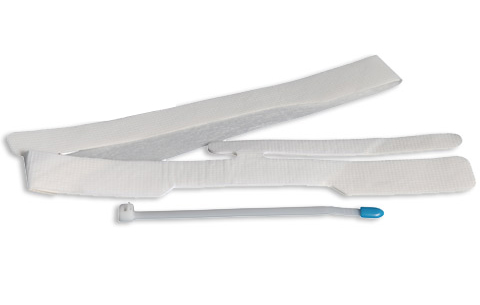
An ET Tube Holder secures the tube against the face with an adjustable strap system, holding it at the correct depth while spreading pressure more evenly than tape or ties ever could. Getting this step right matters enormously. Unplanned extubation and tube displacement rank among the most serious complications in airway management, and either one can turn a stable intubated patient into an emergency within seconds.
Why Securing an ET Tube Correctly Prevents Catastrophic Complications
Once a tube is placed and its position confirmed, keeping it there becomes the next job. An ET Tube Holder guards against two related risks: accidental extubation, where the tube comes out entirely, and tube migration, where it drifts deeper or shallower than intended, sometimes slipping into the right mainstem bronchus and cutting off ventilation to one lung.
Both complications carry real consequences, especially for patients who were difficult to intubate the first time or who are hemodynamically fragile, where reintubation itself carries meaningful risk. Securing the tube isn’t an afterthought tucked onto the end of the intubation checklist. It’s a distinct, deliberate step built into standard airway protocols for exactly this reason.
Why the Stakes Are Higher in Critically Ill Patients
An alert, cooperative patient briefly intubated for a routine procedure faces less risk of tube displacement than a sedated, agitated, or frequently repositioned ICU patient. Turning, transport between departments, and everyday care tasks like suctioning or oral hygiene all create chances for the tube to shift if it isn’t secured well. That elevated risk is a big part of why the securement method gets scrutinized so closely in critical care, specifically.
Tape vs an ET Tube Holder: What the Research Actually Shows
For decades, adhesive tape was the default way to secure an ET tube, and it’s still common today, mostly because it’s fast, familiar, and needs no special equipment. Research comparing tape against commercial holders tells a more complicated story than “the dedicated device always wins.”
One manikin study measured the force needed to extubate and found that tape, applied with sufficient width and length, actually required more force to dislodge than two commercial ET tube holders tested alongside it. A separate cadaver study found the opposite pattern with different holder models, where tape needed significantly less force to remove than three of the four holders tested, and only one specific model consistently beat tape. Put together, this research makes one thing clear: not every Endotracheal Tube Holder performs the same, and technique matters just as much as which category of device gets used.
Why Guidelines Still Recommend Commercial Holders
Despite the mixed evidence on raw extubation force, clinical guidelines have shifted toward recommending commercial holders over tape and ties. The American Heart Association’s ACLS guidelines specifically call for endotracheal tube stabilization devices, pointing to evidence that tube dislodgment after successful intubation happens more often than clinicians once assumed. Beyond pure holding force, tape and ties bring their own downsides: they let the tube gradually migrate over time, can block access to the oral cavity for suctioning and hygiene, and usually need full removal and reapplication for any adjustment, with each reapplication opening another window for accidental displacement.
How an Endotracheal Tube Holder Reduces Accidental Extubation Risk
A well-designed Endotracheal Tube Holder solves several of the tape’s problems at once. Adjustable strap systems let clinicians change depth or reposition the tube without fully removing and reapplying the device, cutting down on the number of high-risk moments over a patient’s course of care. Many holders also spread pressure across a wider surface than a thin strip of tape, lowering the risk of skin breakdown around the mouth during a longer intubation.
B&B Medical Technologies builds its endotracheal tube holder line, including StabilTube™ and LockTite™, around exactly this kind of stabilization, designed to hold the tube at a consistent depth while staying adjustable for ongoing care. For a broader look at how different securement approaches compare, Endotracheal Tube Securing Methods covers additional techniques and their tradeoffs in more depth.
Bite Protection as Part of the Securement System
Tube security isn’t only about the holder. A bite block used alongside it protects against a separate risk entirely: a patient biting down and occluding the tube. Some clinical research has studied bite blocks and ET tube holders together as a combined system, since both devices work toward the same goal of keeping the airway clear and stable throughout intubation.
Step-by-Step: How to Secure an ET Tube With a Commercial Holder
Exact steps vary by product, but most commercial holders follow a similar general sequence.
Confirming Tube Position Before Securing
Before applying any securement device, confirm the tube sits at the correct depth, typically checked through auscultation, capnography, and the depth markings at the lips or teeth. Securing a tube before confirming its position just locks an incorrect placement in, which is why this check always comes first.
Applying the Holder and Adjusting Tension
Once the position is confirmed, apply the holder according to its specific design, usually a strap or harness around the head or neck paired with a clamp or fastening mechanism that grips the tube itself. Tension should be firm enough to stop slippage without turning tight enough to cause skin irritation or pressure injury, which matters even more for patients facing an extended intubation.
Documenting and Rechecking Tube Depth
After securing the tube, document the depth marking at the lips or teeth as a baseline for future checks. Later assessments, part of routine airway rounds, compare the current marking against that baseline, catching gradual migration before it turns into a real displacement.
Common Mistakes That Compromise ET Tube Security
Even with a well-designed holder in place, a few habits can quietly undo its benefit.
Inconsistent Reassessment
A holder applied correctly at intubation can still loosen or shift over the following hours, especially with an agitated patient or frequent repositioning. Skipping routine depth checks lets this kind of gradual change go unnoticed until it turns into a bigger problem.
Applying Tension Unevenly
Uneven tension across a strap or harness can pull the tube slightly off-center, adding pressure on one side of the mouth while leaving the other side less secure. This kind of asymmetric fit is easy to miss during a quick check unless someone’s specifically looking for it.
Failing to Coordinate Securement Checks With Patient Movement
Transport, repositioning, and procedures like bronchoscopy all create chances for tube displacement. Skipping a securement check right before and after these events, and relying only on scheduled rounds, leaves a gap where displacement can happen unnoticed.
Special Considerations for Long-Term and Critical Care Patients
A patient intubated for days faces different securement priorities than someone in for a short surgical case. Skin integrity becomes a bigger concern the longer a device stays pressed against the same spot, which is part of why many ICU protocols favor a holder that spreads pressure more evenly than a narrow tape strip. The Role of Endotracheal Tube Holders in Critical Care looks specifically at how securement priorities shift for patients on extended ventilator support.
Coordination between respiratory therapy, nursing, and physician teams also matters more the longer a patient stays intubated, since several disciplines touch the airway across a single day. Endotracheal Tube Holders: Enhancing Patient Safety in Anesthesia & Intensive Care covers how that cross-disciplinary coordination fits into broader airway safety protocols in both surgical and critical care settings.
Frequently Asked Questions
Results depend on the specific holder tested. Some studies found tape outperformed certain commercial holders, others found the reverse, so both device choice and correct application technique matter.
Beyond holding force alone, tube holders allow depth adjustment without full removal, spread pressure more evenly to cut down on skin breakdown, and address concerns that tube migration may happen more often with tape and ties than once assumed.
Check tube depth as part of routine airway rounds, plus right before and after events like patient transport, repositioning, or any procedure that could shift the tube.
Many commercial holders let clinicians adjust the strap or clamp for repositioning or depth changes without a full removal and reapplication, which cuts down on high-risk handling moments.
In many clinical settings, yes. A bite block guards against a separate risk, the patient biting the tube, while the holder handles tube stability and depth. The two devices are often used together as a combined securement approach.