Using a Nebulizer on a baby should never be treated as a fixed routine without understanding why the treatment has been recommended in the first place. Babies have small, sensitive airways, and saline treatments are usually used to support moisture, loosen secretions, or help make breathing care more manageable when congestion is affecting feeding, sleep, or comfort. The right schedule depends on the baby’s age, symptoms, diagnosis, and the exact treatment plan provided by a clinician.
That is why parents should think about frequency as part of a larger care decision instead of a simple home remedy habit. Some babies may only need occasional saline nebulization during a specific illness, while others may be given a more structured short-term plan. This guide explains what affects treatment frequency, when saline use makes sense, and how to think safely about nebulizer care in infants.
What Determines How Often A Nebulizer Can Be Used On A Baby?
The answer depends on what is inside the treatment cup, what the baby is being treated for, and how the infant responds during and after each session. Saline nebulization is often used differently from medicated treatments, so the frequency should be based on clinical purpose rather than guesswork. A baby with thick secretions, short-term congestion, or a clinician-directed airway care plan may be managed differently than a baby with wheezing, bronchiolitis, or another condition requiring closer supervision.
The most important point is that frequency should follow medical guidance, especially in very young infants. More frequent use is not automatically better. A treatment schedule has to match the reason for therapy, the baby’s tolerance, and whether the sessions are actually helping with secretion clearance or breathing comfort.
When Is Saline Nebulization Usually Considered For Infants?
Saline is generally considered when moisture and aerosolized fluid may help thin mucus or support secretion clearance. In practical terms, parents usually hear about saline when a baby sounds congested, has thick nasal or airway secretions, or needs clinician-guided respiratory support during an illness. The goal is not to flood the airway with treatment. The goal is to improve manageability and comfort while supporting the broader care plan.
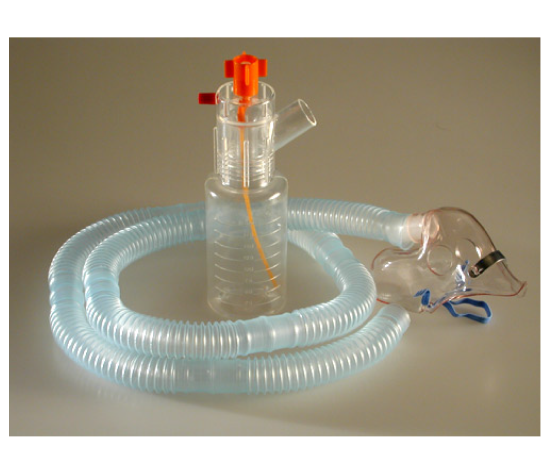
A Nebulizer for Babies can be helpful in these situations when it is used correctly, with the right mask fit and a treatment approach that the caregiver understands well. This is also where product choice matters. A quiet, easy-to-clean setup with consistent aerosol output is easier to use correctly during stressful care moments than a device that is loud, awkward, or difficult to maintain.
How Does A Hypertonic Saline Nebulizer for Infants Change The Conversation?
A Hypertonic Saline Nebulizer for infants should be approached more carefully than standard saline because the concentration and clinical purpose are different. Hypertonic saline is generally considered when a clinician wants to support secretion movement in a more targeted way, but it should not be treated as a routine over-the-counter habit for every infant’s cold or cough.
That matters because treatment frequency with hypertonic saline is based on the care plan, not on parental convenience or general internet advice. The baby’s age, diagnosis, airway response, and tolerance all matter. If you are trying to understand the amount used in a treatment cup, read How Many mL of Sodium Chloride for Nebulizer for Baby? as a companion topic before focusing only on how often sessions should happen.
Why Age And Diagnosis Matter More Than Parents Expect
A newborn, a 2-month-old baby, and an older infant may each need very different levels of caution depending on maturity, airway size, feeding pattern, and the reason treatment is being recommended. Even when the same saline solution is involved, the level of monitoring and the threshold for seeking medical advice can be different.
This is why Nebulizer for babies decisions should always be tied to the child’s exact age and symptoms. A baby with mild temporary congestion may be managed very differently from a baby with labored breathing, chest retractions, poor feeding, or repeated respiratory symptoms. Parents trying to evaluate age-specific concerns should also review Is Nebulizer Safe for 2-Month-Old Baby? so the timing and safety questions are considered together.
What Signs Suggest The Frequency Should Be Reviewed?
Parents should not only ask how often they can use a treatment. They should also ask whether the current plan still makes sense. If the baby becomes more distressed during treatment, seems exhausted afterward, feeds poorly, develops faster breathing, or does not appear to improve, the frequency and purpose of nebulization need to be reassessed by a clinician.
It is also important to watch for situations where repeated sessions begin replacing medical review. A Nebulizer can support care, but it should not delay evaluation when symptoms are escalating. Increasing the number of treatments without guidance can create a false sense that the problem is being managed when the baby may actually need a different level of assessment.
How Should Parents Think About Home Use?
Home use should always begin with a clear understanding of what the treatment is meant to do. Parents often feel pressure to do something quickly when a baby sounds congested, but effective home care depends on correct use, proper cleaning, and realistic expectations. Saline nebulization can support comfort and secretion management in the right situation, but it is only one part of infant respiratory care.
The best home setup is one that caregivers can assemble quickly, operate with one hand if needed, and clean thoroughly after each treatment session. That includes a properly fitted mask, simple cleaning steps, and a machine that delivers a stable aerosol without adding unnecessary difficulty. If parents are looking at safety questions in the earliest stage of infancy, Are Nebulizers Safe for Newborns? is an important related topic to review in a separate step.
Why Cleaning And Device Quality Matter When Treatments Are Repeated
The more often a device is used, the more important maintenance becomes. Moisture, residual saline, and poorly dried parts can affect both hygiene and performance. Repeated treatments on a baby should only happen with a setup that can be cleaned properly after each session and maintained according to the manufacturer’s instructions.
A dependable Nebulizer also matters because repeated infant use places more pressure on consistency. Caregivers need a device that performs reliably, supports practical handling, and does not create extra stress during treatment time. Whether the goal is occasional saline support or a short-term structured plan, equipment quality influences how safely and effectively that plan can be carried out.
Why B&B Medical Technologies Brings Value To Infant Respiratory Care
When parents and clinicians think about saline nebulization in babies, the real issue is not just frequency. It is whether the treatment is being delivered for the right reason, with the right setup, and with a clear understanding of how infant respiratory care differs from standard home device use. That is where B&B Medical Technologies brings value through a respiratory-focused approach shaped by practical care realities, alongside broader care concepts such as Trach Collar Oxygen Delivery: Role in Post-Extubation and Tracheostomy Care, where consistency, humidification, and patient tolerance are essential to effective support.
Infant airway support depends on details that cannot be treated casually. Device consistency, usability, secretion-management goals, and treatment tolerance all shape outcomes. A company grounded in respiratory and neonatal care helps move the conversation beyond generic product shopping and toward better-informed equipment decisions for small, sensitive patients—aligned with the same principles seen in Trach Collar Oxygen Delivery: Role in Post-Extubation and Tracheostomy Care, where stable delivery and careful monitoring support safer, more predictable respiratory management.
Frequently Asked Questions
The frequency should follow a clinician’s instructions because it depends on the baby’s age, symptoms, diagnosis, and the type of saline being used. There is no universal schedule that fits every infant safely.
No. A Hypertonic Saline Nebulizer for infants should only be used when specifically recommended because its purpose and frequency may differ from standard saline. Parents should not assume the two are interchangeable.
Not without guidance. Congestion can have different causes, and repeated sessions may not always be appropriate. If symptoms are persistent, worsening, or affecting feeding and breathing, the baby should be reviewed by a clinician.
Parents should watch the breathing pattern, comfort, feeding, and whether congestion actually improves. If the baby seems more distressed, unusually tired, or harder to settle, the treatment plan should be reviewed.
Not necessarily. More frequent use does not automatically mean better airway support. The benefit depends on the reason for treatment, the baby’s response, and whether the care plan is appropriate for the infant’s condition.