The nose and upper airway normally warm and moisten every breath before it reaches the lungs. During Bubble CPAP, a continuous stream of medical gas flows into an infant’s nostrils through prongs or a mask, and that gas arrives cold and dry unless a humidifier conditions it first. Heated and humidified air restores the temperature and moisture the airway expects, which protects the mucosa, keeps secretions mobile, and allows therapy to continue without avoidable airway complications. This article explains the physiology, the research findings, the recommended targets, and the circuit practices that keep humidification effective.
What Heated and Humidified Air Does for the Infant Airway During Bubble CPAP
In a healthy airway, inspired gas is warmed and saturated with water vapor by the upper airway, and by the time it reaches the distal airways, it has reached core body temperature, typically 37 °C with 44 mg of water per liter. Medical gas from a wall outlet or cylinder differs sharply. It is typically cold and dry, at 23 °C or lower, with a relative humidity under 2 percent.
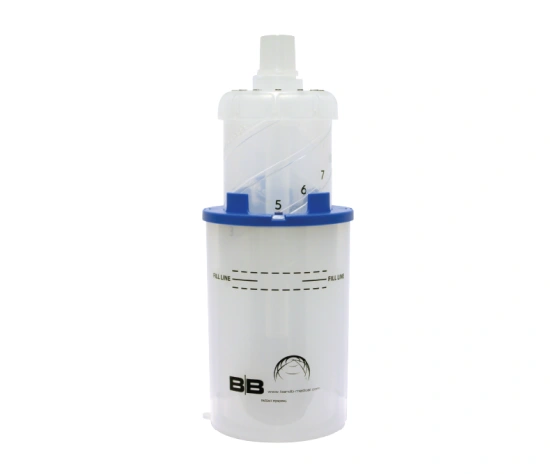
During Bubble CPAP, a heated humidifier sits in the inspiratory line and conditions the gas before it enters the circuit. The water chamber adds vapor, the heater raises the temperature, and the gas leaving the chamber should be at body temperature with full humidity. That condition is maintained along the circuit until the gas reaches the infant. In effect, the humidifier takes over the job the upper airway would normally perform, which is especially important when the gas flow is continuous, and the interface bypasses much of the natural conditioning process.
How Humidification Improves Secretion Clearance and Airway Protection
Heated and humidified gas supports the airway’s own defenses. The mucociliary transport system traps inhaled particles in mucus and carries them up and out of the airway, and its efficiency depends on the temperature and humidity of the inspired gas. When the gas is adequately conditioned, mucus stays fluid, cilia move it effectively, and secretions mobilize for removal.
The benefits of proper conditioning include several outcomes:
- Secretions remain thin enough to clear.
- The epithelial lining stays protected from drying and inflammation.
- The risk of airway blockage from thickened mucus falls.
- The infant’s airway conserves the water and heat it would otherwise lose.
A newborn’s respiratory system relies on humidity to maintain physiological balance, and delivering conditioned gas lets the airway spend its limited energy on growth and recovery. Fewer obstructions also mean fewer interruptions to the pressure support the infant needs.
Why Cold, Dry Gas Harms Airways and Secretions
When inspired gas contains too little moisture, the airway supplies it. Water vapor is drawn from the mucosa until the gas reaches 37 °C and 44 mg/L, and the lower the humidity of the inspired gas, the farther down the airway it must travel before reaching those conditions. Delivering cold, dry gas is associated with water and heat loss, inflammation of the airway epithelium, and an increased risk of airway injury.
The consequences build on one another. Mucosa and secretions dry out, mucociliary function declines, and thick mucus narrows the airway, which raises resistance to airflow. Secretions that accumulate in the lower airways predispose the infant to pneumonia. Infants on CPAP face this risk acutely because the gas is cool, dry, and delivered at a high flow, so the point where the gas reaches full body conditions moves deeper into the respiratory tract. Humidification prevents that chain of events at its origin.
Research Findings on Humidification During Non-Invasive Support
Researchers describe heated humidification as paramount during all forms of non-invasive respiratory support, since inadequate gas conditioning may dry the upper airways. The result can be mucociliary dysfunction, infection, or obstruction by viscous secretions.
A neonatal bench model built to simulate oropharyngeal conditions tested nasal CPAP, high-flow nasal cannula, and nasal high-frequency oscillatory ventilation, all with a heated humidifier conditioning the gas. With nasal CPAP, a mouth leak invariably reduced absolute humidity in the oropharynx across three different gas conditioning scenarios (p<0.001). The finding shows that a humidifier set correctly does not guarantee adequate moisture at the airway when the mouth is open and gas escapes. Care teams, therefore, have a reason to check the interface seal and mouth position alongside the humidifier settings.
Recommended Temperature and Humidity Targets for Infant CPAP
Hospital guidelines converge on a single target. Gas delivered to the infant’s nose should match the conditions of a healthy distal airway.
Parameter | Target or Typical Value |
Gas temperature at the infant | 37 °C (body temperature) |
Relative humidity | 100 percent |
Absolute humidity | 44 mg of water per liter |
Typical unconditioned medical gas | 23 °C or lower, under 2 percent relative humidity |
One pediatric intensive care guideline sets the humidifier temperature at 37 °C to keep the humidified gas at 100 percent humidity and prevent mucosal damage. A neonatal unit guideline likewise directs teams to deliver gas at the nose at body temperature with 100 percent relative humidity and 44 mg/L of absolute humidity. Local protocols and manufacturer instructions govern the exact settings for each system.
Managing Condensate So Humidified Gas Reaches the Infant Safely
Air at 37 °C and full humidity carries 44 mg/L of water, and once that gas enters the tubing and cools, the vapor condenses into droplets, a process known as rainout. Condensate is the cost of effective humidification, and the circuit must be managed to handle it.
In a Bubble CPAP system, condensate that collects in the expiratory limb can raise the pressure delivered to the patient. In published measurements, 20 mL of condensate in the exhalation limb significantly increased delivered pressure and the size of the pressure oscillations. The researchers recommended pressure monitoring at the nasal interface, a pressure-relief valve in the circuit, and emptying the exhalation limb every 2 to 3 hours. The role of that valve is detailed in What is the purpose of the pressure-relief manifold in Bubble CPAP?
Pressure Relief Manifolds, such as the B&B 12.5 cm H2O model, are designed with a 22 mm ID inlet compatible with standard humidifier chambers, so the pressure limitation system joins the humidification already in use. Humidified gas and pressure relief function together, and protocols should address both.
Bedside Practices for Delivering Effective Humidification
Reliable humidification depends on consistent habits at the bedside. Common practices include the following.
- Set the humidifier according to unit protocol, typically 37 °C for infant CPAP.
- Confirm the water chamber is filled and functioning according to the manufacturer’s instructions.
- Check the circuit for condensate, and drain collected fluid, including the exhalation limb every 2 to 3 hours.
- Secure the interface to limit leaks and observe mouth position, since a mouth leak reduces airway humidity.
- Observe secretions for thickness, which can signal inadequate conditioning.
- Monitor pressure at the nasal interface throughout therapy.
Each practice reinforces the others, and together they keep conditioned gas reaching the airway at the intended temperature and moisture level.
Frequently Asked Questions
Guidelines aim to deliver gas to the infant’s nose at body temperature, which is 37 °C with 100 percent relative humidity and 44 mg/L of absolute humidity. Pediatric intensive care protocols set the humidifier at 37 °C to maintain that level.
Medical gas is typically cold and dry, at 23 °C or lower and under 2 percent relative humidity. Delivering it to the airway is associated with water and heat loss, epithelial inflammation, increased risk of airway injury, impaired secretion clearance, and airway blockage from thickened secretions.
Yes. In a neonatal bench model, a mouth leak during nasal CPAP invariably reduced oropharyngeal absolute humidity in all three gas conditioning scenarios tested (p<0.001).
It can. Measurements with 20 mL of condensate in the exhalation limb showed a significant rise in delivered pressure and in pressure oscillations. The researchers recommended pressure monitoring, a pressure-relief valve, and emptying the exhalation limb every 2 to 3 hours.
Researchers describe it as paramount during all forms of non-invasive support, because inadequate gas conditioning may dry the upper airways and lead to mucociliary dysfunction, infection, or obstruction by viscous secretions.
B&B Medical Technologies: Neonatal CPAP Components and Airway Devices Since 1985
B&B Medical Technologies has developed respiratory and airway devices from its Carlsbad, California base since 1985. For infant respiratory support, the company offers the B&B Bubbler water seal valve with a rotating pressure dial and setting lock, along with the Pressure Relief Manifold, whose inlet fits standard humidifier chambers. The Single Pole Clamp, NEO2-Safe, and nCPAP Cap round out the infant Bubble CPAP lineup. Beyond neonatal care, the portfolio covers endotracheal tube securement through StabilTube, LockTite, ET Tape II, ET Tape, and Baby Tape Plus, tracheostomy tube stabilization with TrachGuard and TrachStay, the Universal Bite Block and Bite Proof Bite Block, the HOPE Nebulizer for continuous aerosol delivery, and test lungs with the Resistor Kit, Wrap-Safe, and Accutach Flow Sensor. Together, these products support clinicians caring for adult, pediatric, and neonatal patients.