Anyone searching for the best nebulizer bronchodilator solution quickly learns that the answer starts with a prescriber. In the United States, albuterol, levalbuterol, ipratropium, and the long-acting options are all prescription medications, and the main over-the-counter option, racepinephrine, is limited to mild intermittent asthma. This guide compares the solutions available for purchase, explains the strengths and packaging printed on the label, and covers what to check before buying, so that the prescription, the device, and the pharmacy fit together.
Which Nebulizer Bronchodilator Solutions Can You Buy?
Bronchodilator solutions for a nebulizer fall into five groups, and each group relaxes the muscles around the airways through a different pathway. Short-acting beta agonists, albuterol and levalbuterol, open the airways within minutes. Ipratropium, a short-acting anticholinergic, acts on a separate receptor and is often paired with albuterol in a single premixed vial. Long-acting beta agonists, arformoterol and formoterol, provide maintenance relief across a full day. Long-acting anticholinergics, revefenacin and glycopyrrolate, serve patients with COPD who need scheduled maintenance. Racepinephrine rounds out the list as an over-the-counter option for mild intermittent asthma symptoms.
Each group suits different needs, so the best solution depends on the diagnosis, the severity of symptoms, and the device already in the home. A prescriber weighs those factors and writes the prescription that a pharmacy fills.
Bronchodilator Solutions Compared by Strength, Packaging, and Availability
The labels list strength per milliliter and the volume of each vial, and those two numbers identify the product. The table below summarizes common products.
Solution | Common Strength and Packaging | Class | Availability |
Albuterol sulfate | 2.5 mg per 3 mL unit-dose vial; 0.63 mg and 1.25 mg per 3 mL vials for children; 2.5 mg per 0.5 mL concentrate | Short-acting beta agonist | Prescription |
Levalbuterol | 0.31, 0.63, and 1.25 mg per 3 mL vials; 1.25 mg per 0.5 mL concentrate | Short-acting beta agonist | Prescription |
Ipratropium bromide | 0.5 mg per 2.5 mL vial | Short-acting anticholinergic | Prescription |
Ipratropium and albuterol (DuoNeb or generic) | 0.5 mg and 3 mg per 3 mL vial | Combination | Prescription |
Arformoterol (Brovana) | 15 mcg per 2 mL vial | Long-acting beta agonist | Prescription |
Formoterol (Perforomist) | 20 mcg per 2 mL vial | Long-acting beta agonist | Prescription |
Revefenacin (Yupelri) | 175 mcg per 3 mL vial | Long-acting anticholinergic | Prescription |
Glycopyrrolate (Lonhala Magnair) | 25 mcg, supplied for the Magnair system | Long-acting anticholinergic | Prescription |
Racepinephrine (Asthmanefrin) | Liquid for a hand-held bulb nebulizer | Bronchodilator | Over the counter |
Concentrates are diluted before use according to the label, and unit-dose vials arrive ready to pour into the medication cup.
How Short-Acting and Long-Acting Solutions Differ in Daily Use
Short-acting solutions relieve symptoms quickly and are often scheduled several times a day. State drug program guidance lists 2.5 mg of albuterol up to four times daily in adults, with a maximum of 10 mg per day. Labeling for premixed ipratropium and albuterol describes one 3 mL vial four times daily, with a maximum of six vials per day.
Long-acting solutions follow a slower schedule. Arformoterol and formoterol are dosed twice daily, and revefenacin is dosed once daily for COPD maintenance. Patients on a long-acting solution often keep a short-acting one available for breakthrough symptoms, since long-acting products maintain airway tone across the day without delivering fast relief. The figures above are published maximums for reference, and the prescription label sets each patient’s actual schedule.
Which Solutions Prescribers Commonly Consider for Asthma, COPD, and Pediatric Care
Prescribers match the solution to the condition, and the table shows the combinations that appear most often in published drug program guidance.
Situation | Solutions Commonly Considered |
COPD maintenance | Revefenacin, arformoterol, formoterol, glycopyrrolate |
COPD bronchospasm needing a second bronchodilator | Ipratropium and albuterol combination |
Asthma quick relief in adults | Albuterol or levalbuterol |
Asthma in children 6 years and older | Levalbuterol or low-dose albuterol vials |
Mild intermittent asthma with a confirmed diagnosis | Racepinephrine, an over-the-counter option |
Levalbuterol solutions carry FDA approval for managing and preventing acute asthma exacerbations in children 6 years of age and older. Low-dose albuterol vials at 0.63 mg and 1.25 mg exist specifically for pediatric dosing, so a child’s prescription should never be filled with the adult 2.5 mg strength unless the prescriber specifies it.
How to Buy Nebulizer Bronchodilator Solutions Safely
Purchasing a bronchodilator solution follows a sequence that starts in the prescriber’s office, and each step affects coverage and supply.
- Obtain a prescription that lists the drug, the strength, the vial size, and how often the treatment is taken.
- Choose a licensed retail pharmacy, mail-order pharmacy, or medical equipment supplier to fill it.
- Confirm insurance coverage and quantity limits before the first fill.
- Compare the vials against the prescription label at pickup, checking the name, strength, and count.
- Ask the pharmacist about storage and about compatibility with the device at home.
Many programs, including state Medicaid programs, set monthly limits on nebulizer solutions, and large 90-day quantities of short-acting solutions can trigger a review. Suppliers calculate billable units from the strength and frequency written on the prescription, so a complete prescription prevents delays. Licensed pharmacies supply labeled medication that identifies strength, lot, and expiration, and unlicensed online sellers offer no such assurance.
What to Check on the Label Before You Buy
A few details on the box and foil pouch confirm that the product matches both the prescription and the device in the home.
- The drug name and strength, written as milligrams or micrograms per milliliter, such as 2.5 mg per 3 mL for standard albuterol
- Whether the product is a ready-to-use unit-dose vial or a concentrate that needs dilution
- The expiration date and the storage directions, which often call for keeping vials in the sealed foil pouch until use
- Any device requirement, such as the Magnair system for Lonhala or a hand-held bulb nebulizer for racepinephrine
- The vial count per box, since quantity limits are counted in vials or milliliters
Unit-dose vials open by twisting off the plastic top, and the premeasured liquid pours directly into the medication cup. A vial that looks discolored or cloudy, or that has passed its expiration date, should go back to the pharmacist for replacement.
Matching the Solution to the Right Nebulizer Device
The device delivering a solution influences how much medication reaches the airways. Package-insert testing of premixed ipratropium and albuterol, using a Pari LC Plus nebulizer with a PRONEB compressor, found that the mouthpiece delivered about 46 percent of the albuterol dose and about 42 percent of the ipratropium dose under laboratory conditions. Jet and mesh devices differ in particle output and treatment time, and some products specify their own system, such as the Magnair device supplied with Lonhala.
Buyers comparing compressors, masks, and portability can use Choosing the Best Nebulizer for Homecare: A Comprehensive Buyer’s Guide, and a shorter checklist of priorities appears in Top Considerations When Choosing a Nebulizer for Homecare Use. A prescriber or respiratory therapist can confirm that a chosen device suits the prescribed solution before the first treatment.
Safety Points Before Starting a New Bronchodilator Solution
Bronchodilator solutions commonly cause tremor, nervousness, and a faster heartbeat, and patients should report any of these to the prescriber. Combining solutions or adding doses without guidance raises the risk of side effects, particularly for patients with heart rhythm concerns.
Racepinephrine carries its own cautions. It should be used only for asthma confirmed by a doctor, and overuse can increase the risk of a heart attack or stroke. Symptoms should improve within 20 minutes of a treatment, and a patient who feels no better after 20 minutes, or who needs more than 12 inhalations in 24 hours, should seek medical care. The liquid should be discarded if it looks brown or cloudy, and patients who have taken an MAO inhibitor in the past 14 days should avoid it.
Frequently Asked Questions
In the United States, albuterol, levalbuterol, ipratropium, and the long-acting solutions require a prescription. Racepinephrine is sold over the counter for mild intermittent asthma with a doctor-confirmed diagnosis, and it is used in a hand-held bulb nebulizer.
Comparative studies have found similar effectiveness and side effect profiles for most patients. Prescribers choose between them based on individual response and tolerance.
The standard adult unit-dose vial contains 2.5 mg of albuterol in 3 mL, labeled as 0.083 percent. Lower strengths of 0.63 mg and 1.25 mg per 3 mL exist for children, and the prescriber specifies which one applies.
Premixed ipratropium and albuterol exist because the two are formulated for use together. Combining any other solutions in one cup calls for guidance from a pharmacist or prescriber.
Unit-dose vials arrive in sealed foil pouches and carry an expiration date, and labels often direct patients to keep vials in the pouch until use. Racepinephrine should be discarded if the liquid turns brown or cloudy.
B&B Medical Technologies: HOPE Nebulizer Delivery for Prescribed Aerosol Therapy
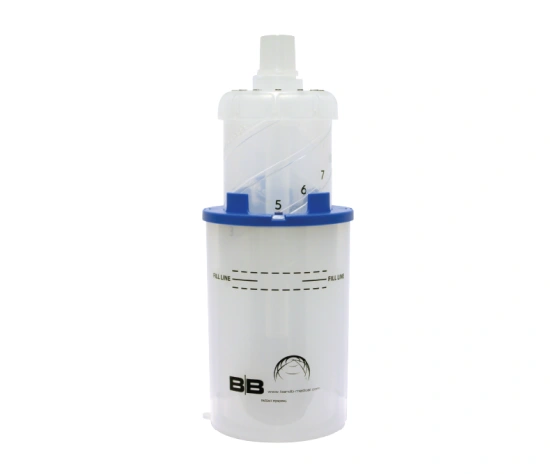
Prescribed solutions reach the lungs through the device delivering them, and B&B Medical Technologies has focused on airway and respiratory equipment since 1985. The HOPE Nebulizer is a continuous nebulizer with adult and pediatric kits and a Heliox port, designed for sustained aerosol therapy. The company’s range also includes endotracheal tube holders such as StabilTube, LockTite, ET Tape II, ET Tape, and Baby Tape Plus, tracheostomy security devices TrachGuard and TrachStay, the Universal Bite Block and Bite Proof Bite Block, and infant CPAP components including the B&B Bubbler, Pressure Relief Manifold, Single Pole Clamp, NEO2-Safe, and nCPAP Cap. Each product supports the same objective, which is dependable delivery of respiratory care to adult, pediatric, and neonatal patients from its Carlsbad, California headquarters.