Humidity is used in many ventilated respiratory-care settings because dry medical gas can irritate the airway and make secretions thicker and harder to clear. In intubated or tracheostomized patients, the natural warming and humidifying function of the upper airway is partly bypassed, so humidification becomes an important part of respiratory support. That same humidity can also influence how aerosol particles move through the circuit before they reach the patient.
Aerosol Therapy in ventilated patients is affected by more than medication dose and device selection. Circuit humidity, condensate, temperature, flow pattern, ventilator mode, airway interface, and device position can all change how much aerosol remains suspended, deposits in tubing, or reaches the lower airway. This is why respiratory teams need to evaluate aerosol delivery as a full system rather than looking only at the medication chamber or Aerosol Inhaler device.
Why Humidity Changes Aerosol Delivery During Ventilation
Humidified gas can change aerosol behavior because particles do not move through a ventilator circuit in isolation. As aerosol travels through warm, moist gas, particles may grow through hygroscopic expansion, collide with tubing surfaces, or settle before they reach the airway. The result is that the medication leaving the aerosol device may not equal the dose arriving at the patient.
This becomes especially important in closed or semi-closed ventilator circuits where tubing length, circuit bends, humidifier position, adapters, and flow patterns can all increase opportunities for medication loss. A small amount of deposition in one part of the circuit may seem minor, but repeated losses across the delivery pathway can reduce the amount of aerosol available for inhalation.
Ventilated patients are also less able to compensate for poor delivery technique. A spontaneously breathing patient can sometimes adjust effort, mouth position, or timing during therapy. A ventilated patient depends on the circuit, ventilator timing, and aerosol-device placement. Humidity, therefore, becomes one part of a larger delivery environment that must be managed carefully.
How Humidified Circuits Affect Aerosol Particle Behavior
Aerosol particles can absorb water while moving through humidified gas. The larger the particles, the more their pattern of travel is altered. Larger particles are more likely to impact on the walls of the circuit, adapters, artificial airways, or structures of the upper airway, rather than remain suspended long enough to reach the smaller airways. This can reduce lower-airway deposition even when the aerosol generator is operating correctly.
Temperature gradients also affect delivery. If warm, humidified gas cools inside the circuit, condensation can form along the tubing. Condensate can trap medication particles, disrupt flow, and increase resistance or cause inconsistent delivery conditions. In ventilated care, this matters because treatment delivery should remain predictable across repeated sessions.
Device placement can either increase or reduce these losses. Aerosol devices positioned far from the patient may allow more time for particle growth and circuit deposition. Clinicians should consider the need to reduce travel distance, as well as ventilator compatibility, circuit integrity, infection-control practices, and manufacturer guidance.
Condensation, Circuit Rainout, and Medication Loss
Circuit rainout is the result of water condensing in the ventilator tubing. This is common when humidified gas comes in contact with cooler surfaces or when the temperature of the circuit changes with the ambient environment. Rainout is more than a housekeeping issue because pooled condensation can collect aerosol particles and alter the consistency of medication delivery.
Condensate build-up in low points, flow sensors, or connectors can also impact ventilator performance. Respiratory teams are often required to manage water traps, tubing position, and circuit checks while minimizing unnecessary circuit disconnections. These details become more important when aerosol medication is being delivered through the same pathway.
During Aerosol Therapy, clinicians should consider whether excess condensation is affecting the delivery route. If medication appears to collect in the circuit or if the patient’s response is inconsistent, the issue may involve circuit conditions rather than medication choice alone. This makes humidification management part of aerosol-delivery quality.
Where Aerosol Device Placement Influences Humidified Circuits
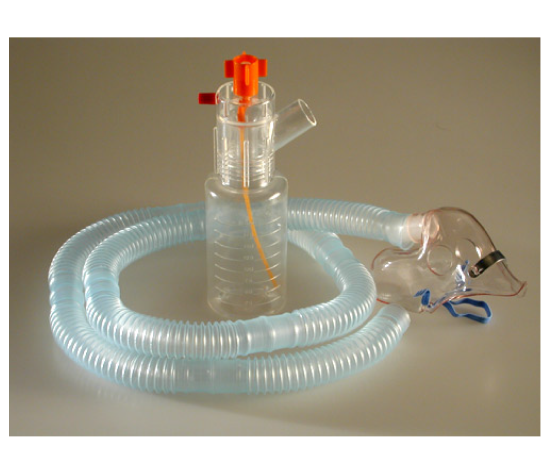
Aerosol device placement can significantly affect medication delivery during mechanical ventilation. Placement near the humidifier may expose particles to a longer humidified pathway, while placement closer to the patient may reduce travel distance. The best placement depends on the device type, circuit configuration, ventilator mode, humidification method, and facility protocol.
Jet nebulizers, vibrating mesh devices, metered-dose inhaler adapters, and other aerosol systems do not behave the same in ventilated circuits. Each device has different flow demands, residual volume, particle output, and sensitivity to circuit conditions. A device that performs well in one setup may deliver differently if moved to another part of the circuit or used under different humidification conditions.
For teams comparing inhaled medication devices more broadly, Aerosol Therapy can be used as a related internal resource to help explain delivery methods, device selection, and clinical respiratory workflows.
How Humidity Interacts With Artificial Airways
Artificial airways change aerosol delivery because the endotracheal tube or tracheostomy tube becomes part of the medication pathway. The inner diameter, tube length, curvature, secretions, and tube position can all influence particle deposition. Humidity may contribute to the quality of secretions and may help protect airway surfaces, but it can also affect the behavior of moisture and particles within the circuit.
If secretions become thick or if the tube starts to accumulate residue, aerosol delivery may be less efficient. Medication particles may deposit along the artificial airway before reaching the lower respiratory tract. Suctioning needs, airway patency, tube position, and humidification quality, therefore, become connected to aerosol performance.
An Aerosol Inhaler used with an adapter in a ventilated circuit also depends on the artificial airway pathway. The medication must leave the device, pass through the adapter, move with inspiratory flow, and travel through the tube before reaching the lungs. Effective delivery can be reduced by any resistance, any condensation, poor timing, or circuit loss.
Ventilator Settings That Influence Aerosol Delivery
Ventilator settings shape aerosol movement because they determine flow pattern, inspiratory time, tidal volume, bias flow, and breath timing. Higher inspiratory flows may increase turbulence and deposition in the circuit, while longer inspiratory times may allow more aerosol to move toward the patient during inhalation. These effects vary by device and circuit setup.
In addition, the bias flow can influence the aerosol availability during the inspiratory phase. Some ventilator systems with continuous flow can deplete medication from the patient or increase circuit deposition if device placement and timing are not optimized. Respiratory teams need to understand the interaction between the ventilator and aerosol device and not assume medication output is equivalent to delivery to the lung.
Patient’s condition adds another layer. Airway resistance, lung compliance, secretion burden, and patient-ventilator synchrony can all affect how aerosol distributes once it enters the airway. This is why aerosol response should be assessed clinically through respiratory status, breath sounds, ventilator graphics, oxygen needs, and treatment goals.
Aerosol Inhaler Use in Ventilated Patients
An Aerosol Inhaler may be used in ventilated patients with the appropriate adapter and technique. Delivery depends on coordination with the inspiratory phase, proper shaking or priming when required, spacer or adapter design, and placement in the circuit. Poor timing may cause medication to deposit in the adapter or tubing instead of being carried toward the lungs.
The humidity may affect this process as the moisture inside the adapter or circuit may impact the movement of medication and increase the deposition on surfaces. If the adapter is wet, contaminated, poorly positioned, or not compatible with the circuit setup, delivery may become less predictable. Clinicians should assess both the device and the environment through which the aerosol must travel.
The advantage of an Aerosol Inhaler in some ventilated workflows is dose consistency and reduced setup time compared with some nebulized treatments. The limitation is that technique, adapter fit, breath timing, and circuit conditions become very important. In ventilated patients, inhaler delivery should be treated as a controlled respiratory procedure rather than a quick medication actuation.
Clinical Signs That Humidity May Be Affecting Delivery
Humidity-related delivery issues are not always obvious. The medication may appear to be administered correctly, while much of the aerosol deposits in the circuit, adapter, artificial airway, or condensate. Clinicians may notice reduced treatment response, inconsistent breath sounds after therapy, unexpected changes in resistance, visible medication residue, or condensation patterns near the delivery pathway.
Circuit inspection can help identify whether moisture is becoming part of the problem. Water pooling, frequent rainout, wet adapters, or residue near connectors may be indicative of the aerosol pathway not remaining consistent. These findings should be interpreted in the context of patient response, ventilator graphics, secretion burden, and the medication being delivered.
Not all poor responses are humidity-related. Bronchospasm severity, airway obstruction, mucus plugging, patient condition, dose timing, and medication selection can all play a role in the outcome. Humidity should be viewed as one modifiable aspect of the delivery system when therapy response is not as expected.
Best Practices for Aerosol Delivery in Humidified Ventilator Circuits
Effective aerosol delivery begins with a circuit setup that supports both humidification and medication movement. Clinicians should confirm that the aerosol device is compatible with the ventilator circuit, is placed as per product and facility guidance, and is used without unnecessary breaks in the circuit. Maintaining the integrity of the circuit helps reduce the risk of infection and prevents changes in pressure or volume delivery.
Condensation should be managed carefully. The position of the tubing, water traps, humidifier settings, and circuit checks are all necessary to ensure safe ventilation with the least loss of medication due to rainout. If there is excessive condensation, the team should determine whether the temperature, the layout of the tubing, or the humidification settings are affecting the aerosol pathway.
Timing also matters. Aerosol delivery should be coordinated with ventilator settings, patient condition, and medication goals. Whether the therapy uses a nebulizer or an inhaler adapter, clinicians should monitor patient response after treatment and adjust workflow when delivery appears inconsistent.
How B&B Medical Technologies Supports Aerosol Delivery Workflows
B&B Medical Technologies has served respiratory care teams for decades with products designed for neonatal, pediatric, and adult respiratory support. Its portfolio includes solutions used across aerosol delivery, Bubble CPAP, airway securement, endotracheal tube support, tracheostomy care, manifolds, flow sensors, and related respiratory workflows. In ventilated patients, that experience is valuable because Aerosol Therapy depends on more than the medication source. It requires dependable circuit connections, practical device placement, stable airway access, and equipment that supports repeated treatment without adding unnecessary interruption to patient care.
For clinicians evaluating aerosol delivery products, B&B Medical Technologies brings a focused understanding of how respiratory devices perform in real bedside conditions. Humidity, circuit condensation, secretion burden, artificial airway position, and ventilator timing can all influence whether medication reaches the lungs as intended. The company’s long-standing respiratory-care offerings are built around those daily clinical demands, helping care teams support aerosol delivery, protect airway access, and maintain smoother workflows in ventilated and high-acuity patients.
Frequently Asked Questions
Humidity can change aerosol particle size, increase circuit deposition, contribute to condensation, and alter how much medication reaches the patient. Its effect depends on circuit setup, device placement, ventilator settings, and airway conditions.
It can reduce delivery in some situations if particles grow, deposit in tubing, or collect in condensate. Humidification is still important for airway conditioning, so clinicians manage delivery technique rather than simply removing humidity.
Placement depends on device type, circuit setup, humidification method, ventilator mode, and facility protocol. The goal is to reduce medication loss while maintaining circuit integrity and safe ventilation.
Yes. Condensation can trap aerosol particles, collect medication residue, alter flow conditions, and make delivery less predictable. Excess rainout should be assessed during ventilated aerosol therapy.
Yes, an aerosol inhaler may be used with a ventilator when the correct adapter, timing, and technique are applied. Circuit moisture, adapter position, and inspiratory timing can affect delivery.
This depends on facility protocol, device type, patient condition, and ventilator setup. Humidification supports airway protection, so any change should be clinically justified and guided by respiratory care policy.
Medication can be lost through circuit deposition, particle growth, condensation, artificial airway deposition, poor device placement, ventilator flow patterns, or timing issues during delivery.
Clinicians should monitor patient response, ventilator graphics, breath sounds, secretion burden, circuit condensation, device position, artificial airway patency, and signs of medication residue in the circuit.